
Understanding Swap in Forex Trading
Learn how swaps impact forex trading in South Africa 🌍 Discover swap types, calculation methods, and tips to manage costs in your trading strategy 💹
Edited By
Henry Morrison
Forex trading carries significant opportunities but also notable risks. For South African traders, these risks include currency volatility, geopolitical events, and local regulatory changes affecting the market. Successful risk management isn't about avoiding risk altogether but understanding it and using smart strategies to protect your capital.
Many traders jump into forex excitedly but soon find themselves exposed due to factors beyond their control: sudden rand swings, unexpected rate changes by the South African Reserve Bank (SARB), or even Eskom-related economic impacts. This makes measured risk controls vital.
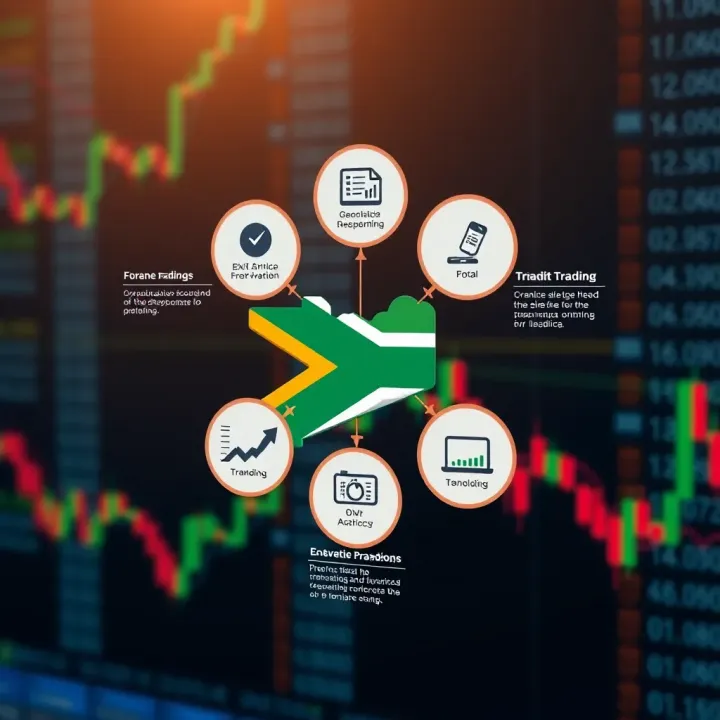
Managing forex risk effectively involves clear controls, disciplined trading, and using available tools that align with South African market conditions.
Key approaches to manage forex risk include:
Position sizing: Limiting the amount you risk on any single trade prevents heavy losses that can quickly drain your account.
Stop-loss orders: Setting exit points before entering a trade protects you from large swings during volatile sessions.
Diversification: Spreading exposure across multiple currency pairs minimizes dependence on one particular currency’s performance.
Adopting these strategies alongside a good forex broker registered with the Financial Sector Conduct Authority (FSCA) ensures regulatory oversight and protection. South African traders should also keep an eye on the SARB’s interest rate outlook and stay updated on local economic developments to anticipate possible market shifts.
Ultimately, effective forex risk management balances ambition with caution, using practical methods fitted to the South African trading environment. This article will walk you through these strategies step-by-step, empowering you to trade smarter and safeguard your investments.
Grasping the nature of risk in forex trading lays the groundwork for any trader who wants to stay afloat in this volatile market. Without a clear understanding of the different risks involved, decisions become guesses, and losses pile up quickly. For South African traders, understanding risk means recognising the specific challenges posed by the rand’s behaviour, leverage offered by brokers, and local regulatory frameworks.
The forex market rarely travels a straight road. Price movements can swing widely within minutes due to unexpected news, central bank announcements, or global economic data releases. For example, a sudden change in United States Federal Reserve interest rate policy can ripple through currency pairs affecting even emerging market currencies like the rand. Traders who fail to anticipate or manage these swings risk rapid losses, especially if they’re holding large positions without protective stops.
Leverage acts like a double-edged sword in forex. While it lets traders control large positions with relatively little capital, it also multiplies losses. Suppose you trade with 100:1 leverage; a 1% adverse move wipes out your entire invested capital. South African traders often get enticed by high leverage offers but without strict money management, this can quickly lead to a margin call or forced liquidation of positions. Margin requirements differ between brokers, so understanding these rules is crucial before opening trades.
Currencies don’t exist in a vacuum; political stability, policy changes, and economic health all swing the rand’s value significantly. Things like the South African Reserve Bank’s (SARB) monetary policy decisions, budget speeches, or unexpected political developments can shift forex rates. For instance, delays in government reforms often dent investor confidence and cause the rand to weaken, making it riskier to hold long positions without factoring these influences.
Trust is vital in forex trading since your broker or counterparty executes your trades. Poor execution, delayed order fills, or even broker insolvency pose risks that sometimes go unnoticed until big problems arise. South African traders should carefully vet brokers authorised by local regulators or internationally recognised entities. Execution risk also includes slippage – the difference between the expected price and the actual fill price, which can greatly affect profitability during volatile periods.
The South African rand is known for its volatility compared to major global currencies. Factors such as commodity price swings, domestic political events, or changes in global risk appetite amplify these fluctuations. On top of that, exchange control regulations place limits on offshore investments for South African residents, restricting how much rand can be converted into foreign currency for trading purposes. This affects liquidity and the ease of moving funds, forcing traders to plan entries and exits carefully.
South African traders must comply with local regulations like the Financial Intelligence Centre Act (FICA), which requires proof of identity and source of funds to curb money laundering. The SARB oversees currency controls and influences the forex market indirectly through monetary policy. Trading platforms must comply with these rules, and traders should ensure their brokers are authorised and follow the regulatory frameworks to avoid legal complications and to safeguard their funds.
South Africa, as an emerging market, feels the tremors of global economic shocks more intensely than developed economies. Events like US-China trade tensions, shifts in US interest rates, or crises in other emerging markets can create waves of capital flight or sudden inflows, dramatically affecting the rand’s exchange rate. South African traders must keep a close eye on these global signals to adjust their forex strategies accordingly. Ignoring these can lead to surprises and losses that catch traders off guard.
Understanding these risk elements helps South African forex traders build better strategies, manage their money smartly, and avoid pitfalls unique to their market context. Being informed is the first defence against uncertainty in forex trading.
Managing risk is the backbone of successful forex trading. Without solid risk control, even the best strategies can lead to heavy losses. In the forex market, where currency values swing rapidly and unpredictably, core risk mitigation techniques provide a safety net. These methods help traders protect their capital, control losses, and position themselves for steady growth over time.
Determining suitable trade sizes means matching your trade size to the amount of capital you're willing to risk. For example, if you have a R100,000 trading account, risking 1% per trade (R1,000) is a common approach. This keeps individual losses manageable. Overleveraging by taking overly large positions can quickly drain your account, especially in volatile pairs like USD/ZAR.
Using risk-to-reward ratios effectively involves setting targets where potential profits outweigh possible losses. Traders often look for at least a 1:2 ratio, meaning they risk R1,000 to make R2,000. This helps maintain overall profitability even if half of trades don’t pan out. For instance, if your stop-loss is 50 pips, your take-profit should aim for at least 100 pips, depending on market conditions.
Diversifying trades across currencies spreads risk instead of betting everything on a single pair. South African traders might pair the rand against multiple currencies (USD, EUR, GBP) and include other emerging market currencies like the Brazilian real. Diversification reduces the impact when one currency experiences an unexpected shock.
Setting realistic exit points prevents emotions from ruling your decisions. A stop-loss placed too close may trigger prematurely due to normal market noise, while one set too wide exposes you to bigger losses. Use recent price levels and volatility to find sensible points. For example, placing stops just beyond a key support level often works well.
Adjusting stops to manage risk dynamically can protect profits or limit losses as markets move. If a trade goes your way, moving stop-loss orders closer to the current price guards gains without closing the position prematurely. This technique, called a trailing stop, helps lock in profit in a trending market.
Avoiding emotional trading decisions is easier when stop-loss and take-profit orders are in place from the start. This mechanical discipline prevents chasing losses or holding losing positions hoping they’ll turn around, a frequent mistake among beginners.
Mechanical discipline with stop orders protects capital and keeps your trading plan intact.
Instruments for hedging forex risk include options, futures, and sometimes correlated currency pairs. Hedging offers a way to reduce downside risk by opening a position that offsets potential losses in your primary trade.
Examples of hedging strategies in practice could be taking a short position in EUR/USD to offset a long ticket in USD/ZAR if you expect global risk aversion impacting the rand. Another example is using options contracts to cap losses during major economic announcements.
Costs and limitations of hedging come in the form of additional fees, margin requirements, and reduced profit potential. Hedging may also complicate your trading and is not foolproof against all risks. Traders should weigh these factors against the benefits before implementing such strategies.
In sum, applying these core risk mitigation methods helps you hold the reins in a sometimes wild forex market. A steady hand backed by concrete controls makes all the difference, especially for South African traders navigating both local challenges and global shifts.
In forex trading, technology plays a vital role in helping traders manage risk more effectively. The right tools not only save time but also reduce emotional decision-making and errors. Platforms and analytical resources allow South African traders to respond faster to market shifts, spot trends early, and safeguard their investments under volatile conditions.
Automated stops and trailing stop-losses are key features in modern trading platforms. These tools automatically close or adjust trades when prices hit predetermined levels, helping prevent large losses. For example, if you set a stop-loss at a certain rand value, the platform will exit the trade once the price moves against you, without needing manual input. Trailing stop-losses go further by moving the stop level in line with favourable price movements, locking in profits as the market moves.
Real-time monitoring and alerts offer immediate updates on market conditions and open trades. A trader using a platform like MetaTrader or Thinkorswim can set alerts for price changes, news events, or margin requirements. This allows swift reactions before risks escalate, especially during periods of increased rand volatility or unexpected global events affecting emerging markets.
Integration with research and analytics puts critical information at your fingertips. Platforms that link directly to economic calendars, news feeds, and charting tools enable traders to base decisions on both technical and fundamental data. This combined access helps South African traders keep an eye on relevant data, such as SARB announcements or currency fluctuations, within a single interface.
Technical indicators signalling risk levels include measures like the Average True Range (ATR), Bollinger Bands, or Relative Strength Index (RSI). These tools reveal market volatility and potential reversal points, offering clues when risks are elevated. For instance, a widening Bollinger Band on the USD/ZAR pair may indicate heightened price swings, signalling caution.
Fundamental analysis resources focus on macroeconomic data and events that impact currency values long-term. South African traders rely on updates such as GDP growth figures, interest rate decisions by the SARB, and trade balances. Access to reliable databases and timely reports allows traders to anticipate market directions beyond daily price moves.
Sentiment analysis and news feeds gauge the mood of the market through price trends, trader positions, and breaking news. Services that aggregate South African and global forex news alert traders to shifts in sentiment following political announcements or geopolitical developments. Keeping up with this real-time information helps traders avoid being caught off-guard by sudden spikes or drops.
Using the right mix of platforms and analytical tools is not just a luxury but a necessity in today’s fast-changing forex environment. They provide a clearer picture of risk and reduce guesswork, especially for South African traders managing both local and international influences.
Sustainable forex trading hinges on consistent discipline and informed decision-making. Best practices provide a framework that helps traders manage risk steadily over time, avoiding costly mistakes driven by emotion or sudden market swings. For South African traders, this means adapting to local market intricacies while sticking to a solid routine that supports long-term success.
Setting clear risk limits is the backbone of any robust trading plan. This means defining exactly how much of your capital you're willing to risk on any single trade—often capped at 1–2%—and sticking to it without fail. For example, if your trading account holds R50,000, you might set a maximum loss per trade at R1,000. This keeps losses manageable and prevents ruinous swings, especially important when dealing with volatile currencies like the rand.
Documenting strategies and review processes ensures clarity and accountability. Writing down your entry and exit criteria, risk parameters, and decision rationale creates a reference that reduces guesswork. It also lays the groundwork for regular reviews, letting you identify what works and what doesn’t. For instance, keeping a simple trading journal where every trade is logged with notes on outcomes helps sharpen future decisions by learning from past errors and successes.
Sticking to rules under pressure is tougher than it sounds. Markets can move fast, and the temptation to chase profits or hold losing positions hoping for a turnaround is real. However, disciplined adherence to your plan's rules safeguards your capital. Remember, consistency beats luck over time. A South African trader might resist the urge to increase risk after a few wins despite prevailing market euphoria, instead choosing to maintain their original risk limits.
Keeping up with economic trends and policy changes is vital. South Africa’s monetary policy by the South African Reserve Bank (SARB), political developments, and global economic shifts can swiftly affect currency pairs involving the rand. Staying informed through reliable sources helps anticipate risks and adjust your strategy accordingly.
Analysing past trades for improvement is about honest self-assessment. Beyond just noting profitable trades, you want to scrutinise errors, timing mistakes, or overexposure to specific currencies. This insight allows you to tweak strategies and avoid repeating the same blunders, keeping your trading sharp and adaptive.
Adapting strategies in response to market shifts means recognising that no single method works forever. For example, a strategy that thrived during stable economic times may falter during loadshedding-induced rand volatility. Adjusting trade sizes or prioritising more stable currency pairs during turbulent periods ensures your risk management stays relevant and effective.
"A sustainable trading approach is less about chasing quick wins and more about steady, informed decisions that protect your capital and adapt to change."
Implementing these best practices builds resilience in your forex trading, particularly when facing South Africa's unique market challenges. Over time, they help develop a trading style that’s both profitable and sustainable, ready for whatever the forex market throws your way.
Learn how swaps impact forex trading in South Africa 🌍 Discover swap types, calculation methods, and tips to manage costs in your trading strategy 💹

🌍 Find the best times to trade forex from South Africa! Learn key sessions, global overlaps, and smart risk tips to boost your trading success 🇿🇦📊

📈 Learn how to trade market indices with ease. This guide covers global and South African indices, practical strategies, risks, and tips to start trading indices confidently.
📊 Discover how derivatives trading is regulated in South Africa, with insights on key authorities, legislation, and compliance in our financial markets.
Based on 6 reviews