
Understanding Derivative Trading for South African Investors
📈 Understand how derivative trading works in South Africa, explore common types like futures and options, and assess risks to boost your investment strategy wisely.
Edited By
James Holden
Derivatives are financial contracts whose value depends on an underlying asset. These assets can be stocks, bonds, currencies, commodities, or interest rates. In short, derivatives don't have intrinsic value themselves but derive it from something else. They're vital tools in the world of finance, especially for managing risk and speculating on price movements.
South African businesses and investors often use derivatives to hedge against risks like currency fluctuations, interest rate changes, or commodity price volatility. For example, an exporter worried about rand-dollar exchange rates might enter a currency forward contract to lock in a favourable rate, protecting future revenue from market swings. Similarly, farmers might use commodity futures to secure prices for maize or wheat before the harvest hits the market.
There are several common types of derivatives, including:
Forwards: Private agreements to buy or sell an asset at a future date for a set price.
Futures: Standardised contracts traded on exchanges, obliging parties to transact at a predetermined price and date.
Options: Contracts giving the buyer the right, but not the obligation, to buy or sell an asset before a certain expiry date.
Swaps: Agreements to exchange cash flows or liabilities, such as interest rate swaps.
Using derivatives offers valuable benefits but also comes with risks. These include market risk—the possibility that prices won’t move as expected—and counterparty risk, where the other party might default. Illiquid markets can make it tough to close positions, which is another danger, especially during stressed economic times.
Tip: Always understand the specific contract terms and assess the reliability of counterparties before getting involved in derivatives.
The South African financial sector is tightly regulated under laws like the Financial Markets Act and overseen by the Financial Sector Conduct Authority (FSCA). These rules aim to maintain fair trading and transparency, protecting both investors and the broader economy.
Next, we'll explore how derivatives function specifically in local markets and the practical steps traders and investors can follow to use them responsibly.
Derivatives play a key role in modern finance, allowing traders, investors, and businesses to manage risks or speculate on market movements. Understanding what derivatives are and how they function helps you navigate financial markets with greater confidence, especially when dealing with complex instruments tied to other assets.
At its core, a derivative is a contract whose value depends on the price or performance of another asset, known as the underlying asset. This means you're not directly buying or selling the asset itself but a financial agreement based on its future value. For instance, a futures contract on maize isn't about immediate ownership but a promise to buy or sell maize at a pre-agreed price on a specific date.
These contracts are useful in various ways. Producers or consumers can lock in prices to protect themselves from market swings. Traders can also use derivatives to take a view on price changes without tying up large amounts of capital. The practical benefit lies in this flexibility—handling exposure to risk without necessarily owning the underlying commodity or instrument.
Unlike shares or property, derivatives have no intrinsic value on their own. Their worth is entirely linked to how the underlying asset performs. This means a derivative could be worthless if the underlying asset moves unfavourably. Understanding this is crucial because it highlights that derivatives aren't standalone investments but tools dependent on other assets’ behaviour.
Derivatives can be based on a wide range of underlying assets including equities (shares), bonds, commodities, currencies, and interest rates. Each type offers different opportunities and risks. For example, a currency derivative might protect a South African exporter against a weakening rand, while an interest rate swap could help a company manage loan repayments if repo rates change.
In the South African context, local markets provide a variety of underlying assets relevant to both large businesses and smaller investors. The JSE offers derivatives linked to top-performing shares like Sasol or Naspers. Commodity derivatives include contracts on gold or platinum — crucial given South Africa’s mining sector.
Additionally, currency derivatives involving the rand are popular because of exchange rate volatility. Companies importing machinery from Germany or China use these contracts to hedge against rand fluctuations. Interest rate derivatives are also common, particularly among banks and large corporates managing exposure to SARB’s repo rate changes.
Understanding the link between derivatives and their underlying assets is fundamental. It helps you grasp how these instruments function as both risk management tools and speculative vehicles in South Africa’s financial landscape.
Understanding the main types of derivatives is essential for anyone involved in trading, investing, or managing financial risks. Derivatives allow participants to manage exposure to fluctuating prices of assets like currencies, interest rates, and commodities, which is especially relevant in South Africa where exchange rates and interest rates can be quite volatile. Knowing how each derivative works helps to pick the right tool for specific needs, whether it’s hedging against losses or speculating for gains.
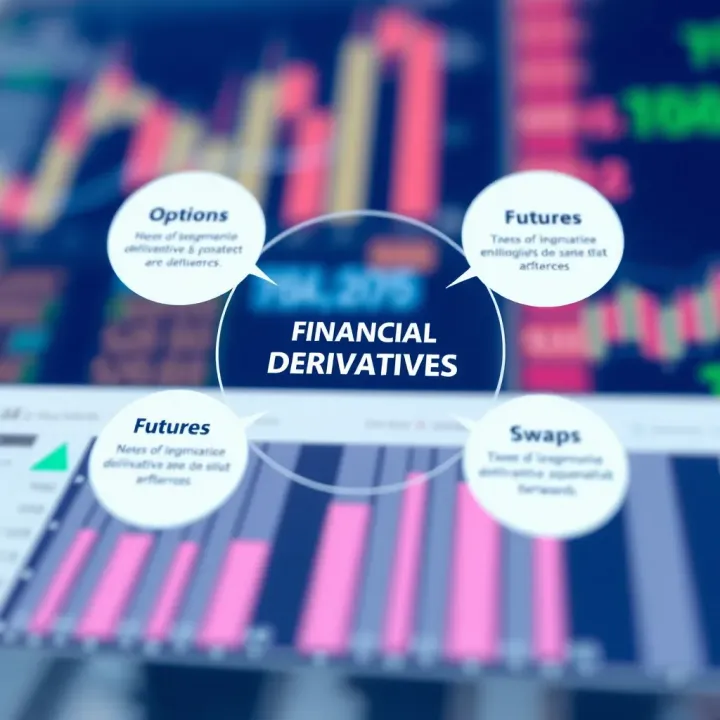
Forwards and futures are both contracts that commit parties to buy or sell an asset at a future date for a price agreed upon today. However, their key difference lies in standardisation and trading venues. Forwards are private agreements tailored directly between two parties, allowing flexibility on contract size and terms. In contrast, futures are standardised contracts traded on regulated exchanges, such as the JSE derivatives market, which adds transparency and reduces credit risk but limits contract customisation.
This difference matters for practical use. Businesses importing goods from abroad might use forwards to lock in a specific Rand exchange rate with their bank, customised exactly to the shipment date and amount. Farmers, on the other hand, might use futures contracts for maize or wheat to hedge against price drops in a more liquid market with margin requirements.
Typically, forwards and futures are vital for hedging. An exporter concerned about a weaker Rand can enter a forward contract to fix the exchange rate for a payment expected in six months. Meanwhile, speculators might profit by betting on price movements of futures contracts without owning the underlying asset, using leverage to potentially magnify returns but also risks.
Options give the buyer the right, but not the obligation, to buy or sell an asset at a set price within a specific period. This makes options highly flexible. For example, a South African investor worried about a Rand weakening can buy a currency option for protection while retaining the opportunity to benefit if the Rand strengthens. They pay a premium upfront but face no obligation to follow through if market moves are favourable.
Swaps, by contrast, involve exchanging cash flows based on different financial variables like interest rates or currencies over time. South African companies with foreign loans often use currency swaps to switch Rand debt payments to US dollars or vice versa, reducing exposure to exchange rate swings. Interest rate swaps are also common for managing loan costs, for example swapping a variable-rate loan for a fixed rate to gain budgeting certainty amid SARB’s changing repo rate.
Knowing when and how to use these derivative types can make a tangible difference in managing financial risks efficiently in South Africa's dynamic economy.
Understanding forwards, futures, options, and swaps equips you to handle various scenarios, whether protecting against volatile currency moves or adjusting interest burdens. Each has unique features suitable for different strategies, making them indispensable tools in the South African financial landscape.
Derivatives play an important role for many South African businesses and investors by helping manage financial risks tied to volatile markets. They offer practical tools to shield against unpredictable shifts, whether in exchange rates, interest rates, or asset prices. This can mean saving real money or avoiding sudden losses that might otherwise derail a business or investment plan. Understanding how to use derivatives smartly is especially relevant here given the rand's swings, local interest rate changes, and varied economic pressures.
For importers and exporters, exchange rate fluctuations pose a big challenge. When the rand weakens sharply against the US dollar or euro, the cost of imported goods can spike unpredictably. Similarly, exporters face uncertainties in how much foreign income they will ultimately receive once converted back to rand. These swings affect profit margins and cash flow, making it harder to plan or budget accurately.
To manage this, many use rand currency derivatives like forwards and currency options. A forward contract allows a business to lock in a specific exchange rate today for a future transaction, providing protection against adverse rate moves. For instance, a clothing exporter expecting payment in dollars months ahead can fix the rand conversion rate now. Currency options offer more flexibility, giving the right but not the obligation to exchange currency at a chosen rate—useful if rates move favourably.
South African companies and banks frequently take on loans with variable interest rates tied to benchmarks like the Johannesburg Interbank Agreed Rate (Jibar). Sudden increases in interest rates can raise debt costs, affecting profitability. To manage this risk, they often enter into interest rate swaps. This derivative lets parties exchange variable rate payments for fixed ones, stabilising loan repayments over time.
Swaps can also influence broader financing strategies. By smoothing interest expense, companies may secure better access to capital or reduce uncertainty when setting budgets. This is particularly valuable in periods when the South African Reserve Bank adjusts rates to control inflation, influencing lending costs.
Derivatives are also popular among investors who want to profit from price changes without owning the underlying assets outright. Using instruments like options and futures, traders can amplify returns through leverage. This means placing smaller capital upfront to control larger positions.
However, speculation comes with significant risks. Price moves can be sharp and sudden, magnifying losses as well as gains. In South Africa’s volatile markets, especially during times of economic uncertainty or political shifts, speculative trading demands discipline and clear risk management. Many retail investors without experience get caught out, underscoring the need for education and cautious exposure.
Smart use of derivatives can protect businesses from unpredictable market changes while offering investment opportunities—but understanding the risks and how these tools work is essential to avoid costly surprises.
Derivatives offer tools to manage risk or profit from market moves, but they come with their own set of challenges. Understanding these risks helps traders and investors avoid costly mistakes and better manage their portfolios. It’s especially relevant in South Africa where markets can be volatile and regulatory frameworks are strict.
Potential losses due to price fluctuations can hit hard in derivatives markets. Unlike direct investments in stocks or bonds, derivatives often amplify exposure. For example, a maize farmer using futures contracts to lock in prices could still face losses if the contract price moves unfavourably before harvest. Price swings of the underlying asset affect the value of derivatives, and unexpected volatility can wipe out gains or increase losses far quicker than many expect.
Counterparty default concerns are another big risk. Many derivatives, especially over-the-counter (OTC) contracts, rely on the other party honouring their side of the deal. If a counterparty defaults, the holder might not recover their investment. South African investors must watch this closely when dealing with smaller brokers or foreign entities. Post-2008 financial crisis, clearinghouses and exchanges have stepped in to reduce this risk, but OTC contracts still carry that exposure.
Why derivatives can confuse retail investors is due to their layered nature. They rely on underlying assets, involve expiry dates, strike prices, and margin requirements. Many retail investors might misread terms or underestimate leverage, leading to positions that rapidly go sour. For instance, buying options without fully grasping the time decay factor can cause losses even if the market moves as anticipated.
Need for proper education and advice can’t be overstated. South African financial advisers and traders benefit from clear guidance to understand contract specifications and risks. Taking shortcuts or ignoring terms can result in disastrous outcomes, particularly with exotic derivatives or complex swaps. Regulatory bodies like the FSCA require disclosure of risks to protect participants, emphasising the need for ongoing learning and professional advice.
Make sure you know the risks before jumping into derivatives — a well-informed approach protects your capital and sharpens your strategy.
By recognising market and credit risks and investing in education, you stand a better chance of navigating the derivatives landscape safely and effectively.
The regulatory environment for derivatives trading in South Africa serves as a vital framework to keep markets transparent, fair, and safe for all participants. Given the complexity and risks attached to derivatives, effective regulation ensures that investors—from retail traders to large institutions—can engage with these financial instruments without exposing themselves unnecessarily to hidden dangers.
South Africa’s approach balances market efficiency with consumer protection, aiming to prevent malpractice while supporting innovation in financial products. As the local derivatives market grows, this environment guides both firms and individuals on what standards they must meet and what risks to look out for.
The FSCA oversees all trading platforms where derivatives are bought and sold in South Africa. This means monitoring exchanges and over-the-counter (OTC) markets to ensure they operate transparently and comply with rules. For example, the FSCA reviews whether platforms maintain adequate liquidity, have fair pricing mechanisms, and provide clear information on contract terms to users. This oversight prevents market manipulation and fraud, safeguarding market integrity.
Beyond market surveillance, the FSCA also ensures that firms offering derivative products are authorised and meet strict operational standards. This includes regular audits and reporting requirements that help detect irregularities early.
Consumer protection forms another core part of the FSCA’s remit with derivatives. The authority demands that financial service providers clearly communicate product risks to clients, avoiding misleading promises about potential returns. This is crucial in South Africa’s derivatives market, where many retail investors may be new to these instruments and prone to misunderstandings.
By enforcing robust consumer protection rules, the FSCA helps reduce cases where traders take on undue risk without realising it. It also requires firms to have dispute resolution procedures, so clients can escalate complaints efficiently.
Disclosure requirements obligate financial institutions and brokers to give clients detailed information before entering into derivative contracts. This includes outlining fees, costs, contract specifics, and the underlying assets involved. Clear disclosure helps investors weigh the benefits and risks properly, rather than jumping into complex trades blindly.
For example, a retail client considering currency options to hedge rand exposure must receive a plain-language summary of how the product works and potential downsides. This transparency supports informed decision-making and aligns with international best practices.
Risk warnings and suitability assessments are closely linked to disclosures but focus more on evaluating whether a particular derivative matches the client’s financial situation and experience. Providers must assess factors such as investment goals, risk appetite, and knowledge level before recommending derivatives.
Where derivatives may not suit an individual—for instance, a novice investor with limited funds—these assessments encourage brokers to suggest alternative strategies or simpler products. This process curbs reckless speculation and protects clients from losses that could harm their financial wellbeing.
Regulations in South Africa aim to strike a balance: enable users to harness derivatives for hedging or investment while putting strong guardrails to shield them from complex risks that can quickly escalate.
Overall, understanding these regulatory aspects equips traders, investors, and advisors to navigate the derivatives space responsibly and with greater confidence in local markets.
📈 Understand how derivative trading works in South Africa, explore common types like futures and options, and assess risks to boost your investment strategy wisely.

📉 Discover how funding pips influence your trades and learn practical tips to manage them effectively as a South African trader navigating local markets.

Learn how to navigate RCG withdrawals in South Africa with ease 💸 Clear steps, key requirements, and tips to avoid delays for smooth fund access.

Understand how forex trading robots automate currency trades 🤖, weighing benefits and risks for South African traders before adding them to your strategy.
Based on 13 reviews