
Forex Trading Basics for South Africans
📈 Start your forex journey with this clear beginner’s guide. Learn market basics, strategies & risk tips tailored for South African traders. Download the helpful PDF now!
Edited By
Charlotte Green
Forex trading involves buying and selling currencies on the foreign exchange market to make a profit. It operates 24 hours a day across global financial centres from Johannesburg to London, New York, and beyond. For South Africans keen to diversify investments or explore new income streams, forex provides a liquid and active market with daily turnover exceeding $6 trillion.
Understanding the basics is key before diving in. Forex pairs like USD/ZAR (US Dollar/South African Rand) reflect how many rands it takes to buy a dollar. Traders speculate on these movements, aiming to buy low and sell high—or the other way around when short-selling. The market’s volatility means price swings can happen quickly, which can be both opportunistic and risky.
Successful trading depends on a clear grasp of how the forex market functions, including factors like economic data releases, geopolitical events, and central bank decisions that influence currencies.
Accessibility: You don’t need large capital to start; many brokers allow trading with modest amounts.
Liquidity: High trading volume ensures you can enter and exit positions easily.
Leverage: Brokers offer leverage, letting you control large positions with limited funds, though this amplifies risks.
Diverse Strategies: From day trading to swing trading, there’s a range of approaches tailored to different risk appetites.
Forex markets have no single central exchange. Trading happens over-the-counter (OTC) via electronic platforms or phone. The South African market overlaps partially with London and New York sessions, meaning active times vary and strategy might need to adjust accordingly.
The South African Reserve Bank (SARB) influences the rand through interest rate decisions, which traders watch closely. Likewise, political developments at home or abroad can cause sharp currency moves.
New traders often face a steep learning curve. It’s not just about guessing price direction but managing risk, using tools like stop-loss orders to limit potential losses. Awareness of forex scams is also vital; choose brokers regulated by respected bodies such as the Financial Sector Conduct Authority (FSCA).
Starting with a demo account can build confidence without risking real money. Meanwhile, following economic calendars helps you stay alert to events that move markets.
In short, forex trading offers opportunities but demands discipline, knowledge, and a well-planned approach tailored to South Africa’s unique financial environment.
Getting a solid grasp of the forex market is a must before you start trading. This knowledge helps you make more informed decisions, reduce risks, and spot opportunities when they appear. In South Africa, where forex trading is growing but still has its quirks—like local regulations and market access—understanding how things work can save you from costly mistakes.
Forex trading involves buying and selling currencies against each other on a global market. It’s the largest and most liquid financial market worldwide, with daily turnover exceeding $6 trillion. Traders speculate on currency price movements to profit, but it also serves businesses and governments for international transactions and hedging.
The scale and accessibility of the forex market mean even individual traders in South Africa can participate using online platforms, often from the comfort of their homes. This makes forex unlike stock markets which usually require more capital or specific access.
Currency pairs consist of two currencies, like the US dollar against the South African rand (USD/ZAR). The major pairs involve currencies from the biggest economies, such as EUR/USD (euro/US dollar), USD/JPY (US dollar/Japanese yen), and GBP/USD (British pound/US dollar). These pairs tend to have tighter spreads, higher liquidity, and more predictable price behaviour.
For South African traders, pairs like USD/ZAR or EUR/ZAR are especially relevant. They reflect dynamics between the rand and major currencies, influenced by factors like commodity prices, interest rates, and geopolitical events. Trading these pairs can offer more opportunities because local news and economic reports often impact their movements directly.
Forex is always traded in pairs because you’re buying one currency while selling another. The price, known as the exchange rate, tells you how much of the second currency you need to exchange for one unit of the first. For example, if USD/ZAR is 18.50, it means one US dollar costs 18.50 rand.
Exchange rates fluctuate constantly due to supply and demand, influenced by economic news, political developments, or market sentiment. Understanding these shifts and how currency pairs behave is key to timing trades well.
The forex market runs 24 hours a day on weekdays, thanks to global financial centres opening and closing at different times. Key sessions include Sydney, Tokyo, London, and New York. As markets overlap, trading volumes spike, creating higher volatility and tighter spreads.
Participants range from central banks, multinational corporations, and hedge funds to retail traders. For South Africans, it’s handy to know what time local markets align with major forex sessions, so you can optimise your trading—ideally during London and New York hours when USD and EUR pairs are most active.
Forex trading isn’t about guessing—it’s about understanding market flows, timing, and reacting smartly to global events. Knowing how the market operates in practical terms means you're better equipped to protect your capital and grow your trading skills steadily.
Starting forex trading can feel like stepping into a new world, but getting off on the right foot is key to long-term success. This stage focuses on practical steps like choosing a trustworthy broker and setting up your account, which shape your entire trading journey. Skipping these basics can lead to costly mistakes or even legal issues, especially in South Africa where regulations guide trading practices clearly.
In South Africa, it’s wise to pick a broker authorised by the Financial Sector Conduct Authority (FSCA). The FSCA supervises financial providers to ensure they play by the rules and treat clients fairly, minimising fraud risks. For example, trading with an FSCA-regulated broker means your funds are generally safer compared to unregulated ones, who might suddenly disappear with your money or offer shoddy platforms.
Since South African traders are subject to certain consumer protection laws and money transfer guidelines, working with regulated brokers simplifies compliance with these requirements. It also links neatly with RICA regulations, since identity verification is mandatory for anti-money laundering measures.
A broker’s trading platform is your main tool for analysing markets and placing trades, so it pays to pick one that’s easy to use and reliable. Look out for platforms like MetaTrader 4 or 5, widely supported in South Africa, as they offer extensive charting tools and automated trading options.
Also, consider mobile compatibility. Many South African traders rely on mobile data and might trade on the go—so a smooth, responsive mobile app helps avoid missed opportunities. Features like one-click trading, easy order management, and real-time quotes also make a big difference, especially for fast-paced trading styles.
Opening a forex trading account usually involves providing identity documents like your South African ID or passport, proof of address such as a utility bill, and sometimes financial statements. This step is essential not just for compliance but also for protecting your account from fraud.
The registration process can vary slightly between brokers, but most South African platforms follow similar Know Your Customer (KYC) rules. Expect to upload your documents online and wait for verification, which typically takes a couple of days. Having your documents ready accelerates this and gets you trading sooner.
Forex brokers offer different account types ranging from standard accounts with higher minimum deposits to micro accounts that let you trade smaller amounts, ideal for beginners. Choosing the right account depends on your starting capital and risk appetite.
Leverage lets you control a bigger position than your initial deposit, magnifying both gains and losses. For instance, a 1:100 leverage means R100 in your account lets you trade R10,000 worth of currency. While tempting, South African traders should be cautious, as high leverage can lead to rapid losses during volatile times or Eskom loadshedding interruptions.
Remember, the foundation you build in this phase affects how smoothly you can trade later. Taking time to select a proper broker and setting up your account correctly protects your capital and gives you confidence going forward.
Understanding the core concepts and tools of forex trading is essential to build a solid foundation and improve your chances of success. These basics help you interpret market moves, identify good trading opportunities, and manage your trades wisely. Without grasping key ideas like chart reading, price action, and trading strategies, it's easy to make costly mistakes or miss out on potential profits.
Charts are the trader’s window into the market. They visually represent currency price movements over time and come in different types. The most common are line, bar, and candlestick charts. Candlestick charts, especially, are popular because they show the open, high, low, and close prices in a clear, colour-coded format. South African traders often find these charts particularly helpful as they reveal market sentiment quickly.
Being able to read price action means watching how price moves without relying solely on indicators. For example, recognising when prices consistently hit higher highs and higher lows suggests an uptrend. Conversely, lower lows and lower highs indicate a downtrend. Basic chart patterns like double tops, head and shoulders, or flags act as signals. Spotting these can prepare you for potential price reversals or continuations, helping you decide when to enter or exit trades.
Different traders have unique styles based on their time availability and risk appetite. Scalping involves making many quick trades for small profits, often held for seconds or minutes. Day trading means entering and exiting positions within the same day, avoiding overnight risk. Swing trading takes a longer view, holding trades for several days or weeks to capture larger price moves. Each has pros and cons — scalping demands intense focus and fast decisions, while swing trading requires patience and resilience against short-term fluctuations.
Technical indicators can support these strategies when used carefully. Indicators like moving averages, the Relative Strength Index (RSI), or Bollinger Bands provide extra layers of information about momentum, trends, or volatility. But relying solely on indicators without understanding the market context can be risky. For example, an RSI in the overbought zone doesn't always mean a reversal is imminent. It's best to combine these tools with chart patterns and price action.
Mastering chart reading alongside practical strategies puts you ahead in forex trading, especially when you tailor your approach to fit your personality and trading schedule.
In essence, familiarising yourself with charts, patterns, and strategies gives you the edge to trade more confidently and avoid knee-jerk decisions. The more you practise these skills, the clearer market signals become, making your trading journey smoother.
Managing risks properly is the backbone of successful forex trading, especially for beginners. Without a sound risk management approach, even the most promising trades can lead to significant losses that wipe out your capital quickly. The forex market’s volatility means that prices can swing sharply within minutes, so protecting your capital guards you against heavy losses and keeps your trading account sustainable for the long haul.
A stop-loss order is a safety net that automatically sells your position when the price hits a certain level, preventing further losses. When placing a stop-loss, you should base it on recent market volatility and support or resistance zones rather than an arbitrary number. For instance, if you’re trading the EUR/USD pair and notice a strong support level at 1.0800, placing your stop-loss slightly below that (say, 1.0780) gives your trade room to breathe without exposing you to a teardown if the market dips briefly.
Misplacing stop-losses—too tight or too loose—can either get you stopped out prematurely or cause unnecessarily big losses. It's practical to combine stop-loss placement with position sizing so the total risk fits within your risk tolerance, typically no more than 1–2% of your trading capital per trade.
Balancing risk and reward means taking trades where the potential reward justifies the risk. A common guideline is aiming for a minimum 1:2 risk-to-reward ratio. For example, if your stop-loss is 50 pips away, your take-profit target should be around 100 pips. This setup means even if you lose half your trades, the winners cover losses and generate profit.
Ignoring this balance often leads traders to chase quick wins or hold losing trades too long, both of which chip away at capital. Remember, consistent small gains with controlled risk will build your capital steadily over time, rather than risking it all on high-stake trades.
Trading is as much a mental game as it is about strategy. Common emotional traps include fear, greed, and revenge trading. Fear can cause you to exit trades too early or miss opportunities, whereas greed can push you into overtrading or risking more than you should. Revenge trading—trying to recover losses quickly—often leads to bigger losses.
These pitfalls are especially challenging when the market moves against you unexpectedly. For example, after a sudden Eskom loadshedding event disrupts global markets, you might feel tempted to make impulsive trades. Recognising these emotions early and sticking to your trading plan can prevent costly mistakes.
Patience is crucial in forex trading. Waiting for the right setups rather than forcing trades prevents unnecessary risks. Consistency in applying your strategy, risk levels, and discipline bore fruits over time; the market doesn’t reward rash moves or chasing trends blindly.
Keeping a trading journal to review your decisions helps maintain this discipline. Also, taking regular breaks to avoid burnout, especially during volatile periods, keeps your mind sharp. Think of forex trading as a marathon, not a sprint—steadiness beats bursts of impulsive action every time.
Staying disciplined with risk management and emotional control protects your capital and builds the foundation for becoming a confident, successful trader.
Navigating forex trading as a South African requires more than understanding charts or market swings. This section highlights critical local elements that make your trading experience practical and compliant. Knowing the rules and tapping into the right resources can save you from costly mistakes and open doors to smarter trading.
South African Revenue Service (SARS) expects you to declare forex earnings as part of your taxable income. Whether you trade through a South African broker or an overseas platform, any profit from forex trading forms part of your annual income and must be declared. For example, if you make R50,000 trading forex over the tax year, SARS considers this income and it may push you into a higher tax bracket. Keeping accurate records, such as statements and transaction summaries, is essential to comply and avoid penalties.
Besides tax requirements, the Regulation of Interception of Communications and Provision of Communication-Related Information Act (RICA) impacts forex traders by demanding verified identity details for opening and operating financial accounts. Financial institutions must comply with RICA by confirming client identities to curb fraud and money laundering. This means when you sign up with a forex broker or a bank for transactions related to trading, you’ll need to provide valid ID, proof of address, and possibly a fax or mobile number verification. Without RICA compliance, your accounts may be blocked or frozen, which could disrupt your trading.
Education plays a big role in building confidence and skill in forex trading. Plenty of South African-focused educational PDFs and online courses are available that cover local market nuances and practical steps. Platforms such as the South African Institute of Financial Markets offer insightful guides on forex basics, risk management, and trading strategies tailored to local conditions. For instance, courses that explain how Eskom loadshedding might affect trade timings can help you plan better.
Joining forex forums and communities offers ongoing support and keeps you updated on real-time market news and tips. Spaces like the MyBroadband forex thread or dedicated social media groups help you connect with fellow South African traders who share insights on brokers, trading platforms, and tax advice. This networking also allows you to test strategies and get feedback, which is invaluable when starting out or adapting to market shifts.
Staying informed about local rules and connecting with a supportive trading community are key steps towards making your forex trading journey a success in South Africa.
By integrating these practical tips, you ensure that your trading is not only profitable but also secure and legal under South African law.
📈 Start your forex journey with this clear beginner’s guide. Learn market basics, strategies & risk tips tailored for South African traders. Download the helpful PDF now!
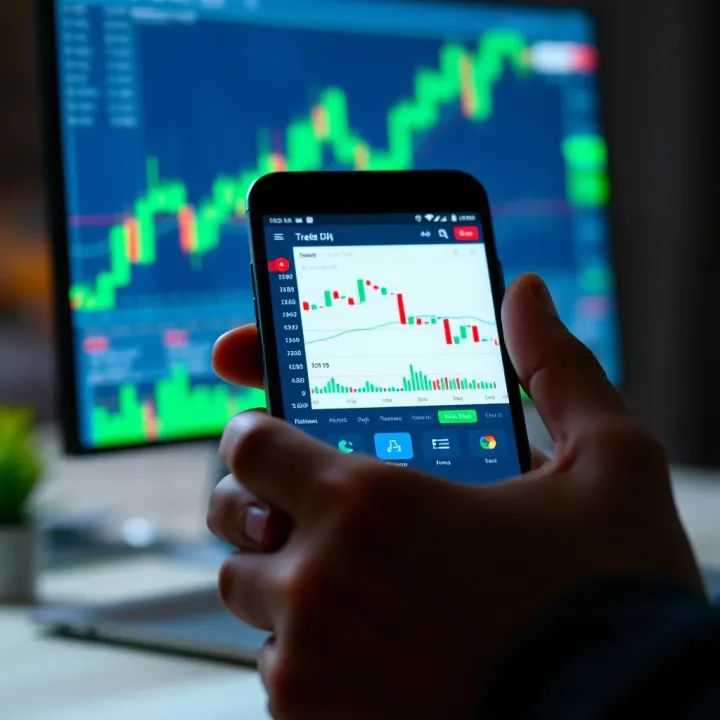
📱 New to forex trading? Discover how to choose the best app for South African beginners, spot key features, and manage risks confidently while trading local and global currencies.
🤖 Discover how forex robots automate currency trading, their pros and cons, and tips to safely use them on South African platforms while staying compliant.
📊 Discover how indices link with forex trading, what drives their movement, practical tactics for SA traders, plus essential risks to watch when trading currencies and indices.
Based on 10 reviews