

Understanding Robot Trading in Forex Markets
Explore how robot trading works in the forex market 🤖, its benefits, key features, risks, and smart tips for South African traders 🇿🇦 to trade wisely.
Edited By
Benjamin Foster
Trading robots, also known as automated trading systems or bots, have become increasingly popular among traders who want to remove emotion from their decisions and operate markets around the clock. If you’re based in South Africa and keen to set one up, it’s essential to understand the nuts and bolts before jumping in.
At its core, a trading robot is a computer programme designed to execute trades automatically, based on a set of rules or strategies. These rules typically rely on technical indicators, price patterns, or algorithmic instructions. The advantage? The robot can react instantly to market movements without hesitation or fatigue, unlike human traders.
Before creating your own bot, you need to be clear on your trading goals and risk tolerance. Are you aiming to scalp small profits throughout the day, swing trade over several days, or invest for the longer term? Different strategies suit different styles, and that choice will shape how your robot operates.
Cost efficiency: Custom bots tailored to your approach can outperform generic commercial options.
Control: You decide the exact triggers and limits, reducing reliance on black-box software.
Learning opportunity: Building a bot sharpens your understanding of markets, programming, and risk management.
South Africans typically have access to global trading platforms like MetaTrader 4/5, TradingView, and Interactive Brokers. Platforms like MetaTrader support MQL programming language, while Python has become popular for more flexible and advanced bots.
For example, you might write a Python script that uses Moving Average Crossovers on the JSE Top 40 ETF to spot buy/sell signals. Testing this logic on historical data (known as backtesting) helps ensure the strategy holds water before risking real cash.
Keep in mind, no robot guarantees profits. Market conditions change, and bots need regular tweaks to stay relevant.
Understanding these basics will set you up to explore the step-by-step process of coding, testing, and deploying your trading robot for smarter, automated trading decisions in South Africa’s markets.
Understanding automated trading and trading robots is the stepping stone to making smart, reliable trades without constant manual input. For South African traders, especially those juggling a full-time job or other responsibilities, automating parts of the trading process can offer a practical way to stay active in the markets. Automated trading removes the need to watch charts all day and reacts instantly to market moves, which can be crucial in fast-paced environments like forex or JSE shares.
Automated trading involves software programmes executing trade decisions on your behalf, based on predefined criteria. Instead of waiting for your cellphone alert or logging onto a brokerage platform manually, these robots analyse market data, spot opportunities, and place orders within seconds. This helps smooth out the human element, which often leads to hesitation or emotional decisions.
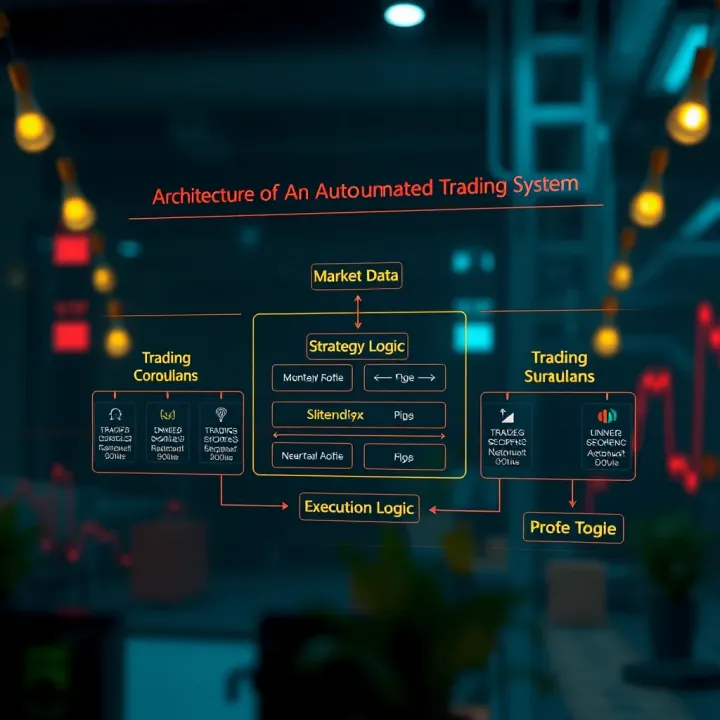
A typical trading robot has several core components: the strategy logic, which defines the rules for when to buy or sell; the data feed, supplying real-time or historical market prices; and the order execution system that sends the trades to your broker’s platform. For example, a robot might use a moving average crossover strategy to decide when the 20-day average crosses above the 50-day average as a buy signal.
Once the conditions set in the strategy logic are met, trading robots automatically execute the trades. They communicate directly through APIs (Application Programming Interfaces) provided by brokers such as Interactive Brokers or local South African platforms supporting automation. This instantaneous execution removes delays, which can be the difference between profit and loss in volatile markets.
One big advantage of trading robots is speed. They can scan and trade multiple markets simultaneously and react without any emotional interference—something even the most disciplined traders struggle with. For instance, a robot won’t hesitate to cut losses when stop-loss conditions trigger, unlike a human who might hope the market turns around.
That said, robots are only as good as the code behind them. Incorrect programming or poorly designed strategies can lead to losses or missed opportunities. Moreover, robots can’t read unexpected news events or sudden market sentiment shifts, which often cause wild swings in price. This means market volatility presents a real risk, especially if your bot isn’t programmed to factor in such conditions.
Understanding the market setting is vital. A robot that performs well during stable trends might struggle during choppy sideways markets. Regular monitoring is necessary to ensure your trading bot adapts or pauses when conditions change. For example, during Eskom load shedding days, markets may behave unusually, suggesting you switch off automated trading temporarily.
A trading robot can take the grunt work out of your trading day, but it’s no set-and-forget solution. Know its limits, test your strategies thoroughly, and stay involved in monitoring performance.
Using trading robots sensibly means balancing their strengths with ongoing oversight. When managed expertly, they’re valuable tools in a South African trader’s arsenal, providing a steadier hand through the noise of daily market moves.
Planning your trading robot strategy forms the backbone of any successful automation effort. Without a clear plan, even the smartest algorithms can falter. This stage helps you set realistic expectations and tailor your robot’s behaviour to your unique trading profile. It also ensures your bot aligns with market conditions and your personal risk appetite.
Choosing between day trading, swing trading, or long-term trading is essential because each style demands different bot behaviour and settings. Day trading focuses on quick, intraday moves; robots here need lightning-fast order execution and must handle high trade volumes. Swing trading, holding positions for a few days up to weeks, requires algorithms that can analyse broader market trends and volatility. Long-term trading suits robots programmed to monitor fundamental shifts and hold positions for months, adapting to different market cycles.
Understanding your preferred style early means you can focus your robot on the right timeframes and risk levels. For instance, if you want your bot to act during short-term bursts of volatility on the JSE, a day trading approach with tight stop-losses might be best.
Setting realistic profit and risk targets helps protect your capital and keeps your expectations grounded. Trading robots aren’t magic machines; if your targets are too ambitious, the bot might take excessive risks. Start with achievable goals like a modest percentage gain per month and a maximum drawdown limit your comfort level allows. This can prevent your robot from chasing every opportunity and burning through your trading account.
In practice, this might mean setting a fixed stop-loss of 1% per trade and aiming for a 2–3% profit target. Monitoring these benchmarks regularly helps tweak the bot’s strategy to suit shifting market moods.
Considering market instruments and times is practical too. Your robot might perform brilliantly on equities but struggle with the volatility of forex or cryptocurrencies. Also, trading during active market hours increases chances of liquidity and better fills. For South African traders, focusing on JSE shares or ETFs during weekday trading hours often makes sense, avoiding lower volume periods like public holidays or early mornings.
Selecting instruments and trading windows carefully ensures your robot works where market conditions best suit its design.
Popular technical indicators for automation include Moving Averages, Relative Strength Index (RSI), Bollinger Bands, and MACD. These are fairly straightforward to program and widely used because they offer clear signals on momentum, trend strength, and potential reversals. For example, a robot might trigger a buy when the short-term moving average crosses above the long-term moving average, signalling a potential upward trend.
Choosing indicators that suit your trading style boosts the chances your bot will make informed, consistent decisions. Overloading your robot with too many indicators can muddy the signals and slow decision-making.
Creating entry and exit rules is key to automating your decisions clearly. Your robot needs strict criteria for when to enter trades and when to exit; this removes emotional interference and ensures consistent execution. For instance, you might program your bot to enter a trade when RSI drops below 30 (oversold condition) and exit when it rises above 70 (overbought).
These rules help lock in profits or cut losses before market conditions shift drastically. Testing different rule sets during backtesting can shape how aggressively or conservatively your robot trades.
Incorporating risk management parameters (like stop-loss, take-profit, position sizing) is non-negotiable. Without protecting your capital, even the best strategies can fail. For example, setting a maximum loss per trade at 1% of your total capital safeguards you from rare but sharp market downturns.
Position sizing according to volatility or account size prevents your robot from risking too much on a single trade. Your code should include automatic adjustments to scale trade size, reflecting your overall risk management framework.
Well-planned strategy beats guesswork every time. The better you define your goals, rules, and risk limits upfront, the smoother your robot runs and the less chance of nasty surprises.
Having these elements in place gives your trading robot a strong foundation to perform consistently in South Africa’s dynamic markets.
Selecting the right tools and programming environment is a vital step in building a trading robot. It sets the stage for ease of development, testing, and deployment—especially for traders balancing learning curves and market demands. Choosing a platform with robust community support and compatible broker integration can save time and reduce technical headaches later.
MetaTrader 4 and 5 remain popular among retail traders worldwide, including South Africa, primarily due to their specialised scripting language, MQL4 or MQL5. This environment is tailor-made for trading automation, offering built-in functions for technical indicators, order execution, and position management. Because many brokers support MetaTrader, you can quickly connect your robot to live or demo accounts. The downside is MQL’s syntax can feel restrictive compared to full programming languages, but it does simplify common trading tasks.
Python has gained traction among algorithmic traders for its flexibility and vast libraries. Trading through APIs, such as Interactive Brokers’ or local brokers that support API access, gives you more control over order types and data handling. Python allows integration of advanced analytics and machine learning, which can enhance your strategy. While this approach demands more programming knowledge and setup time, it suits traders looking to build tailored, complex robots.
Apart from mainstream choices, platforms like TradingView offer Pine Script, a simpler coding environment focused on strategy testing and alerts. They can be a good starting point if you want to try algorithmic concepts without heavy coding. Locally, brokers like IG or EasyEquities have developed APIs or simplified automation tools, bridging the gap between beginner-friendly interfaces and professional-grade programming.
Trading robots operate through a sequence of decisions: reading market data, evaluating conditions, and executing trades. Understanding flow control — like if-else statements, loops, and functions — helps you translate your trading rules into code. For example, you might instruct your robot: "If the 50-day moving average crosses above the 200-day average, trigger a buy order." Getting comfortable with logical conditions is the foundation for making your robot responsive and reliable.
Each platform or language has its syntax rules—how you write statements, define variables, or call functions. Whether it’s MQL keywords or Python libraries like pandas for data manipulation, mastering these basics enables you to build and modify your code efficiently. For instance, understanding how to declare variables, create loops, or use built-in functions for calculating indicators is indispensable.
No robot runs perfectly from day one. Debugging—finding and fixing errors—is a regular part of developing your trading bot. Use print statements or built-in debuggers to track performance and catch mistakes like incorrect variable usage or faulty trade logic. Maintaining your code also means updating it to adapt to changing market conditions and fixing bugs that may surface during live trading. Regular checks safeguard against costly errors.
Choosing the right platform and getting comfortable with programming basics builds a strong foundation. It arms you to develop a responsive, effective trading robot suited to your style and the South African market.
Crafting a trading robot is more than just writing code—it involves carefully developing the logic and thoroughly testing it before trusting it with real money. This stage is where your ideas turn into a practical tool. Testing keeps you from costly mistakes and helps refine your strategies so that your bot behaves as expected under different market conditions.
Structuring your robot’s code properly is the backbone of development. Think of it like building with lego bricks: you need a solid framework that handles data input, decision-making logic, and order execution separately. Clean, modular code makes it easier to troubleshoot and add features later. For instance, segmenting code into functions like "signal detection" and "order placement" can save time when you want to tweak just one part.
Implementing trade triggers and filters involves specifying precise conditions under which the robot enters or exits trades. Your bot might, for example, initiate a buy when the 10-day moving average crosses above the 50-day average, but only if the Relative Strength Index (RSI) is below 70 to avoid overbought situations. Filters reduce false signals, which can be costly in South Africa’s sometimes volatile markets.
Integrating stop-loss and take-profit orders is essential risk management. You define clear exit points to protect capital and lock in profits without relying on emotions or guesswork. A practical example is setting a stop-loss at 2% below entry and take-profit at 5% above. This ensures you avoid serious losses if the trade goes south, especially during unexpected moves like those caused by Eskom loadshedding announcements.
Using historical data effectively helps you measure how your robot might have fared in past market conditions. For South African equities, use data spanning several years that cover different trends and shocks. A bot that only performs well in bull markets might struggle during corrections, so diverse data sets matter.
Understanding backtest results and avoiding overfitting is about reading the results critically. Overfitting is when your strategy matches historical quirks too closely, losing effectiveness in real trades. If your bot’s performance looks too perfect in backtesting, it’s a red flag. Instead, aim for consistent, reasonable returns.
Adjusting parameters for better outcomes means fine-tuning indicators and thresholds based on your backtest findings. If the stop-loss triggers too early and cuts wins short, consider widening it slightly. This iterative process improves your robot’s balance between risk and reward.
Testing in real-time market conditions with a demo account gives your robot a chance to run without risking actual money. It’s like a dry run that reveals practical issues like connectivity delays or unusual behaviours on live feeds.
Monitoring performance and stability during this phase is critical. Watch how often your robot trades, its win/loss ratio, and if there are any technical glitches. This process helps ensure your code runs smoothly outside of historical datasets.
Preparing for live deployment means checking everything—from your broker’s support of automated trading to having backup plans if your system fails. Having alerts for unexpected losses or disconnections can save you hassle. Starting with small amounts in real trading will help you gain confidence before scaling up.
Developing and testing your trading robot is not a one-off task but a cycle of coding, testing, and refining. In South Africa’s dynamic markets, this diligence can make the difference between a bot that works and one that burns your budget fast.
Setting up your trading robot for live markets is where the rubber meets the road. You’ve done the planning, coded your strategy, and tested it thoroughly. Now, it’s about deploying your bot carefully, managing your capital wisely, and keeping a close eye on performance. This stage is key to turning theory into real results, especially given how fast markets can change.
Choosing a reliable broker with automation support is the first step in live deployment. Look for brokers who not only allow algorithmic trading but also offer robust APIs or platforms compatible with your robot’s programming language. For South African traders, brokers like IG or local platforms integrated with MetaTrader 5 provide smooth automation. A reliable broker ensures your orders execute quickly and accurately, reducing slippage and downtime.
Managing your account and capital means never risking more than you can afford to lose. Even with a backtested robot, the markets can throw curveballs. Many traders follow the rule of risking 1% or less of their total trading capital per trade. Set daily and monthly loss limits to protect yourself. For example, if your live account holds R50,000, consider capping losses at R500 per trade or R2,000 per month. Using a separate account exclusively for automated trading helps track performance clearly.
Protecting against technical failures is often overlooked but vital. Power outages, internet drops, or software glitches can disrupt trading and cause unwanted losses. Consider solutions like running your robot on a virtual private server (VPS), which stays online 24/7 with stable connections. Ensure your trading setup includes backup power or an uninterruptible power supply (UPS), especially in South Africa where loadshedding is common. Have a manual override ready so you can pause or stop your robot if needed.
After going live, keeping track of performance and market changes becomes a daily task. Monitor key metrics such as win rate, drawdown, and return on investment. Markets evolve, so a strategy that worked well during the local equity rally may stumble during more volatile periods. Using dashboards or trading journals helps spot trends and anomalies early.
Updating strategies as needed is crucial to staying relevant. For instance, if your robot trades forex and sudden interest rate changes shift market behaviour, you may need to tweak entry conditions or risk settings. Regularly revisiting your code and parameters based on recent data avoids surprises. Many traders schedule monthly or quarterly reviews — don’t let your robot run on autopilot forever.
Finally, recognising when to halt or adjust automation saves your capital from unnecessary risk. If the robot’s drawdown exceeds your predefined limits or the market enters an unusual phase (like a political crisis or unexpected SARB policy shift), pause trading. No system is perfect, and knowing when to step back is as important as starting. It’s better to retool your strategy or sit out a rough patch than to chase losses blindly.
Live deployment demands vigilance and discipline. A trading robot is a tool, not a set-and-forget solution. Managing it thoughtfully keeps you ahead in the markets and protects your hard-earned capital.
Explore how robot trading works in the forex market 🤖, its benefits, key features, risks, and smart tips for South African traders 🇿🇦 to trade wisely.

🤖 Explore how robot trading automates your trades in SA markets, learn strategies, risks & tips to pick the right auto trading system confidently.

Explore robot trading apps in South Africa 🤖📈 Learn how they work, key features, pros and cons, plus tips to pick the right one for your investments.

Master synthetic indices trading 📈 with practical strategies, risk tips, and expert advice tailored for South African traders and beyond. 🌍💡
Based on 9 reviews