

Using Robots for Forex Trading: A Practical Guide
🤖 Discover how forex trading robots work, their pros and cons, risk management tips, and how South African traders can pick reliable automated tools.
Edited By
Isla Bennett
EA robots, short for Expert Advisors, are automated systems designed to trade forex markets without human intervention. These robots run on platforms like MetaTrader 4 or 5 and make decisions based on sets of rules written into their programming. Essentially, they scan the market for trading signals and execute buy or sell orders automatically, often faster and more consistently than a human trader could.

At the core, an EA robot uses algorithms that analyse price action, technical indicators, or other market data to pinpoint entry and exit points. Traders or developers define these criteria to match specific strategies, such as trend-following, scalping, or breakout trading. Once the conditions align, the robot places trades, manages stop losses and take profits, and sometimes even adjusts its approach according to changing market conditions.
For example, a simple moving average crossover strategy might have the EA open a buy trade when the short-term moving average crosses above the long-term average, and close or reverse the trade when the opposite happens. This kind of set-and-forget approach helps traders avoid emotional decision-making and operate their accounts 24/7.
Using EA robots in South African forex trading can be a solid way to access markets outside usual working hours and reduce the stress of constantly monitoring charts. They also allow traders to backtest strategies using historical data, helping to refine assumptions before risking real money.
However, the robots aren’t foolproof. Market volatility, especially around major news releases or unexpected economic events, can cause losses if the programmed strategy doesn’t account for such swings. Moreover, a poorly coded EA can open too many trades or make ill-timed moves, eroding your capital quickly.
Remember, no robot replaces the need for careful monitoring, regular updates, and sound money management.
Broker Compatibility: Ensure your forex broker supports EA platforms like MetaTrader and does not restrict automated trading.
Internet Reliability: Given South Africa's issues with load shedding and connectivity, a stable internet connection is critical to prevent trade execution lapses.
Risk Parameters: Adjust your EA’s risk settings to suit your account size given local market conditions and volatility.
Regulatory Compliance: Stay abreast of financial regulations from the Financial Sector Conduct Authority (FSCA) when deploying automated strategies.
Understanding how EA robots work equips traders and investors to make smart decisions about integrating automation in their forex strategies, especially within South Africa’s unique trading environment.
EA robots, short for Expert Advisors, have become an integral part of forex trading worldwide, including here in South Africa. They automate decisions and execution based on programmed rules, reducing the need for constant manual monitoring. This automation can help traders react quickly to market movements, something that’s especially useful when juggling day jobs or domestic duties.
Expert Advisors are specialised software designed to trade currencies automatically on platforms like MetaTrader 4 or 5. Instead of relying on human intuition, they execute trades based on predefined criteria, allowing trading 24/7 without fatigue or distraction. Imagine waking up to see profits from trades that happened overnight — that’s the practical benefit.
This automation fits nicely in forex where the market never truly sleeps. South African traders can access global currencies alongside rand pairs, using EA robots to manage trades even during loadshedding or when away from their screens.
At the core of every EA is an algorithm — a set of explicit instructions. These usually include how to enter or exit trades, when to increase or decrease position sizes, and when to stop trading altogether.
For example, an algorithm might be programmed to buy USD/ZAR if the 50-day moving average crosses the 200-day moving average from below, signalling a potential upward trend. The advantage here is consistency; the robot won’t second-guess or hesitate, which often happens with human traders.
EA robots rely on clear-cut rules defining when to open and close trades. These rules can be based on technical indicators like RSI (Relative Strength Index), Moving Averages, or candlestick patterns. Clear signals help to minimise emotional decision-making.
A practical example: setting the robot to enter a long (buy) position when the RSI dips below 30 and exit when it climbs above 70. This method creates a disciplined trading routine that can potentially reduce losses from impulsive moves.
Effective risk management is baked into well-designed EA robots. They control trade sizes, set stop-loss orders, and calculate take-profit levels automatically. This helps in protecting capital from sudden market swings.
For instance, an EA might never risk more than 1% of your trading account on a single trade. This built-in discipline is crucial, especially for traders new to forex who might otherwise gamble recklessly.
EA robots are coded to work seamlessly with popular trading platforms like MetaTrader, which is widely used in South Africa. This integration means trades are executed directly on your live account without delay, as long as your system and internet connection are stable.
Besides execution, platforms offer backtesting features, allowing traders to test how their EA would have performed historically on specific currency pairs. This step is critical before actually committing money.
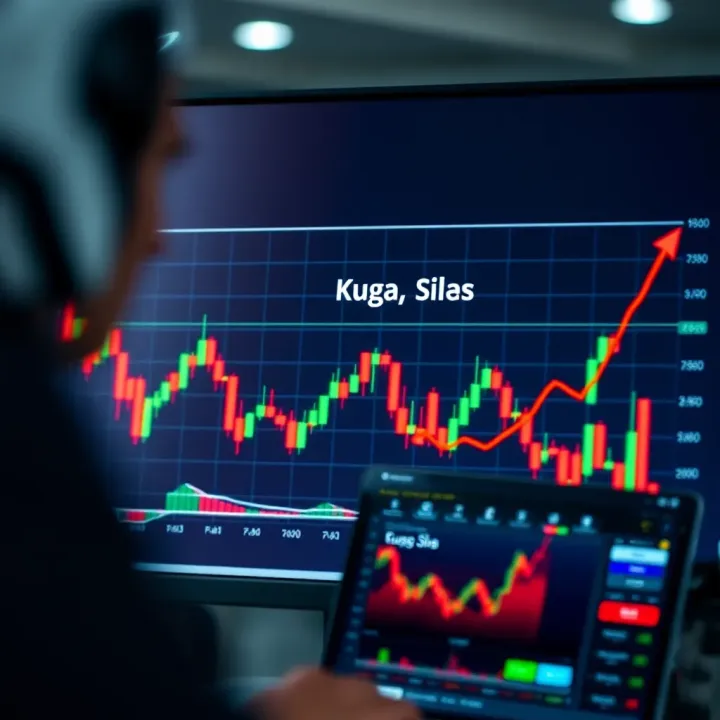
Automated trading systems like EA robots combine pre-set rules and risk controls to help traders operate more efficiently and objectively, freeing them from the stress of constant market watching.
Understanding these fundamentals helps you appreciate how EA robots can fit into your trading strategy, especially given the unique challenges South African traders face, such as loadshedding and connectivity issues. Clear, programmable rules and solid risk management offer a way to maintain control even when life or the power grid throws a spanner in the works.
EA robots follow specific trading strategies designed to suit different market conditions and trader preferences. Understanding these strategies helps users choose or customise the right automated system for their goals and risk tolerance. The common approaches include trend following, scalping, and grid or martingale methods.
Identifying market trends lies at the heart of trend following systems. These EAs aim to detect when a currency pair is trending upwards or downwards over a period and enter trades aligned with that movement. For example, an EA might buy when the price consistently makes higher highs and higher lows, signalling an uptrend.
Recognising the trend early allows the EA to ride momentum and capture longer-term gains. This is practical in forex markets where trends can last hours or days rather than minutes.
Typical indicators used by trend following EAs include moving averages and the Average Directional Index (ADX). Moving averages smooth out price data to highlight the trend direction; a common rule is entering a buy trade when the short-term moving average crosses above the long-term one.
The ADX measures the strength of a trend without regard to direction, helping filter out sideways or choppy markets where trend following is less effective. These tools keep the EA aligned with market momentum, reducing trades made on false signals.
EA robots employing scalping make rapid trades, often holding positions for just seconds to a few minutes. The goal is to grab small profits repeatedly by taking advantage of minor price fluctuations.
Quick entries and exits are essential here. The EA must monitor price ticks closely and execute trades lightning fast, reacting to momentary setups. An example would be a robot that buys when the price drops a few pips below a recent high, then exits almost immediately after a small gain.
Volatility and spread considerations play a big role in scalping. Since profits per trade are very small, high spreads (the difference between the buy and sell price) or unpredictable swings can wipe out gains. Scalping EAs are more suited to pairs or markets with tight spreads and stable liquidity, such as EUR/USD or USD/JPY.
Additionally, sudden volatility spikes can trip stop losses or cause slippage, so some scalping EAs include rules to avoid trading around key news releases.
Grid and martingale systems use position sizing techniques that involve scaling into or out of trades systematically. A grid EA places buy and sell orders at set intervals around a price, creating a “grid” of trades.
Martingale techniques typically increase the trade size after losses to recover previous drawdowns once the market reverses. For instance, an EA might double its position size each time a trade loses, aiming to win back losses plus a small profit eventually.
While these methods can stack profits during sideways markets, they carry significant risks. The main danger is that a strong trend against the position can lead to rapidly growing losses. In South African forex trading, where volatility can shift quickly, martingale strategies require careful risk management and often a sizeable account balance.
Traders should carefully consider the risks before deploying grid or martingale EAs and ideally test them extensively through backtesting and demo trading.
By understanding these common strategies, South African traders can better assess which EA robot matches their trading style, risk appetite, and market conditions.
Understanding both the advantages and potential pitfalls of using EA robots is key for traders aiming to navigate the automated trading landscape effectively. These systems promise to streamline trading by automating decision-making, but they're not without their weaknesses. An informed perspective helps manage expectations and avoid common traps.
EA robots operate purely on rules and data, leaving emotions like fear or greed out of the picture. For a trader, this can be a game-changer because emotional decisions often lead to premature exits or risky positions. Imagine a trader in Johannesburg who normally panics during volatile forex hours; an EA robot sticks to the plan without hesitation, helping preserve capital.
Unlike a human who needs breaks or sleep, an EA robot can scan the market 24/7. This means opportunities can be captured even in off-hours, such as during the Asian trading session when South African traders might be offline. Continuous monitoring helps catch sudden price movements and execute trades instantly, providing an edge especially in the fast-moving forex market.
One useful feature of EA robots is their ability to backtest strategies against historical data. This allows traders to see how a particular approach would have performed without risking real money. For example, a Cape Town-based trader can simulate a trend-following strategy across the past two years to check its robustness. While past performance doesn't guarantee future results, backtesting does improve a strategy’s credibility before it's put to work live.
Some EA robots are tweaked excessively to perform perfectly on past data — a pitfall known as over-optimisation or "curve-fitting." This can lead to disappointing real-world results because the robot is tuned to conditions no longer present. For instance, a bot fine-tuned to Johannesburg markets' specific volatility patterns might falter when unexpected geopolitical events shift market behaviour.
EA robots require a reliable internet connection and uninterrupted power supply to function optimally. In South Africa, where loadshedding (scheduled power outages) and occasional network disruptions are common, this can present real challenges. Traders need backup options like UPS devices or mobile data connections to ensure their robot doesn’t miss critical trades or execute poorly due to downtime.
While EA robots follow pre-set rules, markets often behave unpredictably, especially during events like central bank announcements, political upheavals, or unexpected economic data releases. Such scenarios can cause widely swinging prices that a fixed algorithm may not handle well. Traders relying solely on robots should be prepared for occasional losses and consider manual intervention during extreme events.
Using EA robots offers clear benefits like discipline and constant market vigilance, but South African traders must balance this with practical risks including tech reliability and unforeseen market moves.
Optimising your experience with EA robots means weighing these factors carefully and staying ready to adapt when the market shifts or technical glitches arise.
Trading with Expert Advisors (EA) robots in South Africa comes with its own set of unique challenges and opportunities. Local traders must carefully weigh specific factors such as broker choice, power reliability, internet connectivity, and legal compliance to make the most of automated trading systems. These considerations ensure EA robots can perform as intended without unnecessary interruptions or legal pitfalls.
South African traders should prioritise using brokers regulated by the Financial Sector Conduct Authority (FSCA). The FSCA oversees financial services to protect clients from unethical practices and fraud. Trading with FSCA-regulated brokers guarantees adherence to local consumer protection laws and maximum transparency. For example, an FSCA-regulated broker must segregate client funds and provide clear terms, reducing the risk of losing money due to broker insolvency.
Operating under FSCA jurisdiction also facilitates easier dispute resolution compared to offshore brokers. While many international brokers welcome South African clients, sticking with locally regulated platforms offers peace of mind and legal safeguards.
MetaTrader 4 and 5 remain the dominant platforms for EA robot deployment due to their user-friendly interfaces and vast community support. Most South African brokers, including those regulated by the FSCA, provide seamless access to MetaTrader platforms, allowing traders to easily upload, configure, and run EA robots.
This compatibility is vital because switching platforms mid-trade can lead to execution delays or misalignment with your trading strategy. Local brokers offering MetaTrader typically provide customer support familiar with both the software and South African trading conditions, which smooths out potential technical glitches.
Loadshedding — scheduled power cuts by Eskom — can disrupt trading by cutting power to your devices and internet router. For automated trading, unexpected power outages may stop your EA robot from executing trades or managing risks properly.
To manage this, South African traders often invest in backup power solutions such as uninterruptible power supplies (UPS) or solar inverters with battery storage. A UPS can power your desktop or trading rig long enough to pause or shut down systems safely, whereas solar inverters offer longer-term power during extended outages. Having these backups ensures your trading activities remain uninterrupted, preserving capital and strategy integrity.
Fast and stable internet is just as crucial. Interruptions can delay order execution or cause slippage, undermining the robot's effectiveness. South African traders often use fibre-optic broadband where possible, supplemented by mobile LTE routers or backup SIM data plans.
Setting up automatic failover — switching to mobile data if fibre drops — can maintain connection. Traders must test their internet setup regularly to prevent surprises during crucial market moves. Reliable internet plus power backup forms the backbone of effective EA robot trading from home or office.
Profits from automated trading are subject to South African tax laws, just like manual trades. The South African Revenue Service (SARS) considers these gains as income if trading is your business or as capital gains if you trade part-time.
Keeping detailed records of all trades, profits, losses, fees, and associated costs is essential for accurate tax filing. Traders should consult SARS or tax advisors to clarify whether their EA trading counts as business income (subject to income tax and provisional tax) or capital gains tax applies. Ignoring tax obligations can lead to penalties and interest.
Apart from tax, automated traders must comply with SARS regulations around recordkeeping and reporting. Automated systems process multiple trades rapidly, so systematic record management—using spreadsheets or specialised software—is vital.
Traders also should be mindful of foreign exchange rules if their broker operates offshore or if they withdraw funds in foreign currency. Ensuring all trades and transactions comply with the Financial Intelligence Centre Act (FICA) and other relevant legislation protects you from inadvertent non-compliance.
South African traders using EA robots should never overlook local regulatory and infrastructural realities. Choosing the right broker, securing reliable power and internet, and meeting tax requirements create a solid foundation for successful automated trading.
🤖 Discover how forex trading robots work, their pros and cons, risk management tips, and how South African traders can pick reliable automated tools.

Master synthetic indices trading 📈 with practical strategies, risk tips, and expert advice tailored for South African traders and beyond. 🌍💡

Explore Pocket Option's key features, safety tips, and trading strategies tailored for South African users. Trade binary options with confidence! 📈💼🇿🇦

🔎 Explore Quotex, an online platform for binary options and digital trading in South Africa. Learn about its features, tools, risks, and account options to see if it fits your trading style.
Based on 7 reviews