

Gold Forecast Today for South Africans
📈 Discover today’s gold price trends in South Africa, factors driving the market, and what investors should watch to make informed choices amid global shifts.
Edited By
Ethan Collins
Tracking the gold price today helps investors make informed calls amidst economic shifts and geopolitical tensions. Gold often acts as a safe haven during uncertainty, but its price swings depend on a mix of global and local factors, especially for South African investors who deal with currency volatility and local market conditions.
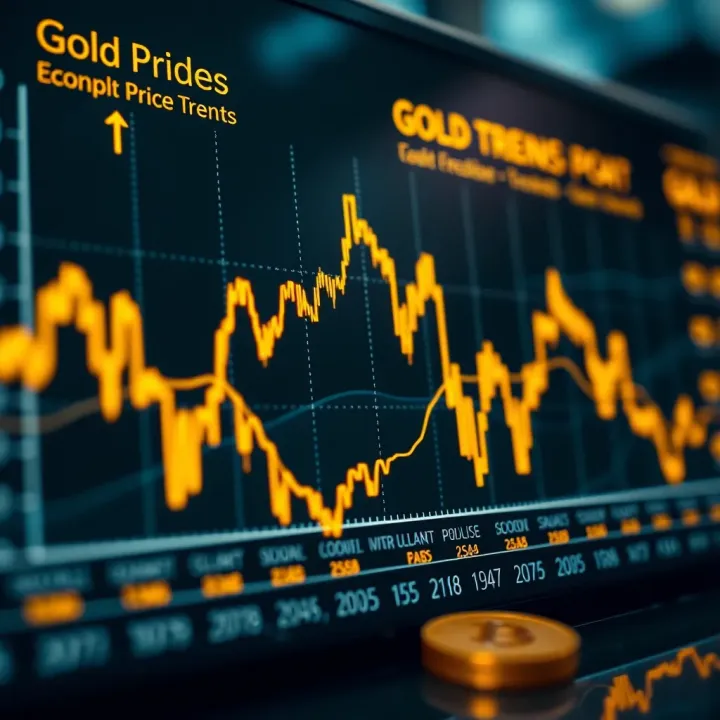
Several key drivers influence gold prices:
US Dollar Strength: A weaker US dollar usually pushes gold prices up, as gold becomes cheaper for holders of other currencies, including the South African rand.
Interest Rates: When central banks like the US Federal Reserve hike rates, gold tends to drop since it has no yield. Conversely, lower rates generally boost gold demand.
Inflation Trends: Rising inflation often increases gold’s appeal as a store of value, especially when consumer prices climb faster than interest earnings.
Geopolitical Unrest: Crises, such as conflicts or trade tensions, increase gold's demand as a shelter from volatile markets.
Local Currency Fluctuations: For SA investors, rand weakness can make gold a useful hedge, as gold prices in rand terms may rise even if dollar prices are stable.
Local factors play a role as well:
Eskom’s ongoing loadshedding and economic uncertainty often impact investor confidence.
Fluctuations in the rand due to political news or commodity price changes feed into gold’s local price.
The JSE’s exposure to mining stocks, including gold miners, can influence investment flows into physical and paper gold.
For South African investors, combining awareness of global economic indicators with local market movements is crucial when forecasting gold prices.
Monitor US inflation reports and interest rate announcements closely.
Keep an eye on rand performance versus the dollar.
Watch geopolitical developments, as they often cause sudden price moves.
Diversify portfolios with gold-related assets like ETFs, bullion, or mining shares to manage risk.
This snapshot equips traders and investors with reliable factors to consider when looking at today’s gold price forecast. Understanding these moving pieces can help you make sharper, more practical investment decisions.
Getting a clear snapshot of gold prices right now helps investors and traders make timely decisions. This overview is crucial because gold reacts quickly to global shifts, currency movements, and local market conditions. Keeping tabs on how gold is priced today lets you identify short-term opportunities or risks before they become major issues.
Globally, gold prices are shaped by factors like US dollar strength, interest rates, and geopolitical tensions. For example, if the US Federal Reserve signals a pause in rate hikes, gold often gains momentum due to lower yields making non-interest-bearing assets like gold more attractive. Recently, gold rallied amid rising inflation fears and unrest in Eastern Europe, reflecting its safe-haven appeal.
Such price swings affect traders who need to react swiftly, and investors aiming to hedge portfolios against riskier assets. Monitoring global market movements provides clues on gold’s direction, especially when international economic data release coincides with volatility in shares and bonds.
South Africa's gold prices don't always track international rates one-to-one because of the Rand's swings and local demand. For instance, when the Rand weakens, local gold prices in Rand terms may rise even if the dollar price stays steady. This difference is important for South African investors buying physical gold, mining shares, or ETFs priced in Rands.
Understanding both global and local pricing gives a fuller picture. Traders focusing only on dollar gold might miss out on profit opportunities created by Rand movements. Similarly, gold miners listed on the JSE respond to both the international metal price and domestic currency fluctuations.
The Rand is notoriously volatile due to domestic political developments, Eskom loadshedding woes, and global market swings. This volatility impacts gold prices in a distinct way. When the Rand weakens sharply, South African gold becomes more expensive locally, which can attract local investment as a store of value. On the other hand, a stronger Rand often tempers local gold prices.
For example, during periods of Rand weakness in 2023, many investors increased gold holdings to protect their wealth from currency depreciation. This behaviour shows gold's role as a natural hedge for South Africans exposed to Rand risk.
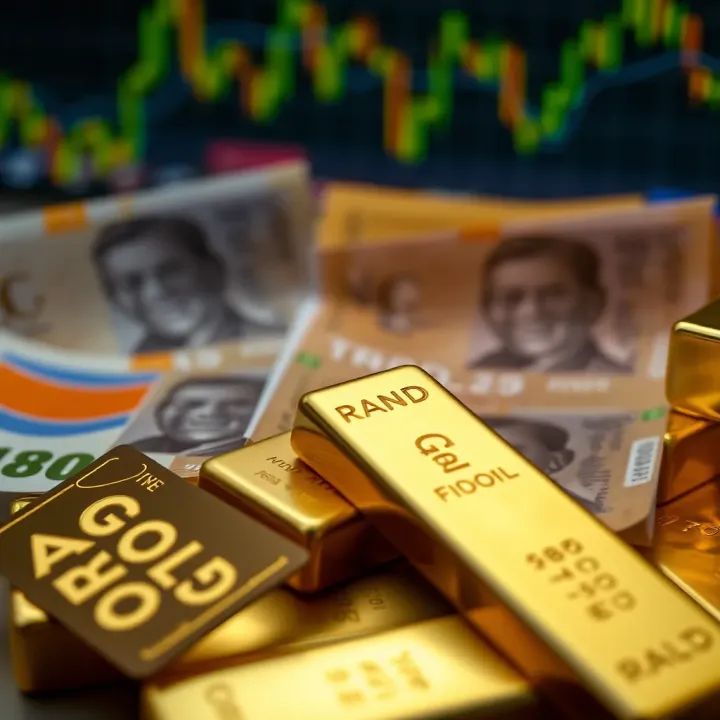
Rand and international gold prices often move inversely but are interconnected. If the Rand drops against the dollar, South African gold prices in Rand typically surge even if the international dollar price is flat. Conversely, if the global gold price rises due to inflation fears but the Rand strengthens, the local price may see muted gains.
These dynamics matter when timing purchases or sales of gold-related assets in South Africa. Traders and investors need to watch both gold price charts and Rand exchange rates side by side. It’s this dual lens that helps spot the real opportunities or risks in the local gold market.
Monitoring both the international gold price and Rand movements provides South African investors with a more accurate reading of the market and helps tailor investment strategies with better timing and risk management.
Through understanding these current market conditions and their local implications, traders and investors are better equipped to navigate gold’s fluctuations with clear insight rather than guesswork.
Understanding the key factors that influence gold prices is essential for anyone looking to trade or invest in the metal. These factors shift frequently, reflecting changes in the global economy, geopolitical climate, and investor attitudes. For South African investors, these elements are intertwined with local conditions such as Rand fluctuations, making awareness critical.
Interest rates and inflation trends play a big role in gold’s appeal. When central banks raise interest rates, interest-bearing assets tend to look more attractive, and gold, which yields no interest, often loses some charm. Conversely, if inflation rises and rates lag behind, gold frequently gains appeal as a store of value. For example, if the South African Reserve Bank signals an aggressive rate hike to curb inflation, gold prices might take a bit of a breather as fixed income becomes more competitive.
Employment data and economic growth also weigh on gold markets. Strong jobs figures and GDP growth typically indicate a healthy economy, reducing demand for safe havens like gold. On the flip side, disappointing employment stats or slowing growth spur interest in gold as a shelter. In South Africa, rising unemployment or weak manufacturing output can lead investors to favour gold to hedge against economic uncertainty.
Global conflicts and political uncertainty can send gold prices climbing, as investors seek safety amid turmoil. Take recent tensions in the Middle East or ongoing disputes in Eastern Europe: such events often push gold prices higher, reflecting its status as a crisis commodity. South African investors should watch these flashpoints closely, as international geopolitical unrest often shakes local markets and boosts gold’s appeal.
Trade relations and sanctions also leave their mark on gold. Trade wars or sanctions can disrupt supply chains, affecting the availability or cost of gold-related products. For instance, tightened sanctions on a major gold-producing country can lead to reduced global output, nudging prices upward. Conversely, easing trade tensions tends to calm markets, softening gold demand.
Investor behaviour during market volatility is a key driver. When stock markets wobble, investors often turn to gold for balance. Sharp sell-offs on the JSE or global equities sometimes trigger renewed gold buying, as it’s seen as a stabiliser amid the noise. That said, during periods of risk-on sentiment, demand for gold might ease.
Role of ETFs and central bank purchases in the gold market can't be understated. Exchange-traded funds (ETFs) provide easy access to gold exposure; large inflows or outflows influence price moves directly. Central banks, including South Africa’s Reserve Bank, accumulate gold reserves as part of their monetary strategy, affecting demand over the long haul. For example, recent central bank buying in emerging markets has supported prices, a trend South African investors should track for market clues.
Keeping an eye on these key factors helps investors understand not just where gold prices are today, but where they might go next, allowing for better strategic decisions.
Forecasting gold prices involves understanding various tools and methods that investors and analysts use to predict future movements. These methods help traders and investors make informed decisions, whether they're looking to hedge risks or capitalise on price swings. In the context of South Africa’s unique economic environment, accurate forecasts can protect wealth from Rand depreciation and global market shifts.
Chart patterns and trendlines form the backbone of technical analysis. They reveal the collective psychology of the market by showing recurring patterns in price behaviour, such as head-and-shoulders or double bottoms. Trendlines help identify support and resistance levels, which indicate where prices may pause or reverse. For example, a gold price testing a long-term upward trendline on the JSE-listed gold ETF might suggest continued gain if it holds above that line.
Traders often use these patterns to spot entry and exit points without relying on economic fundamentals. This comes in handy during volatile times when news flow can sway prices wildly but the chart still guides the likely path. In South Africa, where market sentiment also weaves in Rand volatility, visual chart evidence helps zoom into precise moments to buy or sell.
Moving averages smooth out price fluctuations, showing the overall direction over time. Simple moving averages (SMA) or exponential moving averages (EMA) are common. When short-term averages cross above longer-term ones (a "golden cross"), it usually points to bullish momentum, and vice versa for a "death cross." Momentum indicators like the Relative Strength Index (RSI) measure whether gold is overbought or oversold, warning investors to expect a correction.
For instance, if the RSI for a gold miner’s stock listed on the JSE climbs above 70, it might prompt a cautious investor to consider selling or waiting. Combined, moving averages and momentum indicators provide clues on whether price trends will hold or fade, key to timing investments.
Fundamental analysis looks beyond the charts to understand the causes behind price shifts. Evaluating economic data is essential here. Key factors include interest rates, inflation figures, and currency strength. Lower interest rates often push gold prices higher as the opportunity cost of holding non-yielding gold declines. In South Africa, the SARB’s repo rate decisions influence domestic gold demand, while global inflation trends steer international prices.
For example, rising US inflation rates might lift global gold prices, which then react in ZAR terms, especially if the Rand weakens. Economic data helps investors anticipate these movements before they show on charts.
Assessing gold supply and demand dynamics also informs forecasts. Supply disruptions from major producers like South Africa’s own miners or geopolitical tensions in gold-rich regions can tighten availability and lift prices. On the demand side, physical gold buying in India and China matters, as well as investment flows from ETFs and central banks.
Understanding this balance helps set realistic price expectations. For instance, a surge in central bank gold purchases amid fears of currency devaluation can signal stronger prices ahead, a useful insight for South African investors who use gold to hedge Rand risk.
Combining technical signals with solid fundamental data creates a stronger forecast and reduces reliance on guesswork or hype alone.
South African investors face unique challenges and opportunities when it comes to gold investment. The local currency's fluctuation, particularly the rand's frequent volatility, can significantly influence gold prices in local terms. Understanding how gold can act as a safety net against currency pressure is crucial. This knowledge helps investors make informed decisions to protect and grow their wealth.
Protecting wealth in times of currency pressure: Gold often gains attention in South Africa when the rand weakens. Since gold prices are globally quoted in US dollars, a weaker rand means gold becomes more expensive in local currency terms, which can protect the value of your investment from rand depreciation. Investors can use gold as a shield during periods of economic uncertainty or where currency depreciation is a risk, preserving buying power for essential expenses or future investments.
Historical performance during Rand depreciation: Looking back, whenever the rand has slid sharply—like during political or economic instability—gold prices in rands have tended to rise. For example, during the periods of rand volatility in 2015 and 2019, local gold prices increased even while global gold prices fluctuated. This pattern confirms gold’s role as a store of value amid currency weakness, giving investors a practical way to safeguard their savings.
Physical gold versus gold ETFs: South Africans can choose physical gold, such as Krugerrands or gold bars, or invest via gold exchange-traded funds (ETFs). Physical gold offers tangibility and personal control but requires secure storage, which adds to costs and logistics. Gold ETFs provide a hassle-free alternative with easier liquidity and lower entry costs, but they don't offer the same sense of ownership or protection in times of systemic risk.
Mining stocks and unit trusts: Another avenue is investing in gold mining stocks listed on the JSE or unit trusts focused on gold-related assets. Mining stocks carry higher risk due to factors like operational performance, management, and global gold prices but can offer dividend income and growth potential. Gold-focused unit trusts spread the investment across various assets, balancing risk but often involve management fees that affect returns.
Volatility in gold prices: While gold is often seen as a safe haven, its prices can swing sharply, especially in a global context. Factors like shifting US dollar strength, global economic data, or geopolitical tensions cause frequent price moves. South African investors should be prepared for these fluctuations and avoid over-reacting to short-term changes.
Liquidity and transaction costs: Buying and selling gold assets in South Africa can incur significant costs. Physical gold has higher transaction fees and security expenses, while ETFs and shares attract brokerage fees and tax implications, like capital gains tax. Understanding these costs upfront helps investors avoid surprises and manage their portfolios more efficiently.
For South African investors, gold remains a valuable part of a diversified portfolio — especially when considering the rand’s ups and downs. But recognising the various investment paths and their attendant risks makes all the difference in achieving sound outcomes.
Understanding what lies ahead for gold prices gives traders and investors a leg up in planning their next moves. It’s not only about watching today’s numbers but preparing for how current shifts—economic, geopolitical, or market sentiment—could influence prices tomorrow and beyond. For South African investors especially, who face the double-edged sword of domestic currency fluctuations and global trends, forecasting is a vital part of managing risk and seizing opportunities.
Expected price movement based on current events
Gold prices often respond quickly to breaking news and events, making the short-term outlook something to monitor closely. For example, recent tensions in the Middle East or announcements by the US Federal Reserve can send gold tumbling or surging within days. Right now, with some uncertainty lingering over interest rate decisions and ongoing trade discussions, gold might see some ups and downs. For investors, this means keeping an eye on daily market updates and readying themselves for potential price swings.
Influence of upcoming economic releases
Key economic data—such as inflation reports, GDP figures, and employment numbers—can nudge gold’s price up or down depending on their surprise factor. Take the South African Reserve Bank’s inflation outlook or US consumer price index reports; unexpected rises in inflation often boost gold as a safe-haven asset. So, knowing when these figures are set to drop helps investors anticipate movements. Traders might set alerts around these dates or adjust their positions to guard against sharp moves.
Impact of global inflation and interest rates
Over the longer haul, persistent high inflation usually cushions gold prices because investors turn to it as a store of value. Conversely, rising real interest rates (interest rates adjusted for inflation) can weigh on gold, making yield-bearing assets more attractive. Around 2024, with many central banks grappling to tame inflation without choking growth, gold’s price trajectory could hinge on how successfully interest rates balance this act. For South African investors, this means factoring in both global monetary policy and how the RAND performs under varying inflation scenarios.
Shifting demand from emerging markets
Emerging markets, especially in Asia and parts of Africa, increasingly drive gold demand. Changes in wealth, cultural buying patterns (think weddings and festivals), and urbanisation impact this significantly. India’s festival season often lifts gold buying, while China’s middle class growth fuels investment demand. Any slowdown in these markets can put pressure on prices. Keeping tabs on demographic and economic changes in these regions provides insight into where gold might be headed over the next few years.
Watching gold’s near- and longer-term trends helps investors stay ahead of shifts—whether it’s a sudden global event or a steady economic shift in fast-growing markets. Spotting these patterns early can make a real difference in building a strong, resilient portfolio.
📈 Discover today’s gold price trends in South Africa, factors driving the market, and what investors should watch to make informed choices amid global shifts.

📊 Get clear insights on EUR/USD trends, economic signals, and geopolitical effects to make smarter trading choices. Understand market moves with confidence! 💹

Explore Ripple (XRP) price prediction in South Africa 📈. Learn how market trends, analysis methods, and events shape investment choices for XRP.

📊 Stay ahead with today's Nasdaq forecast! Learn how market trends, key economic factors & top US tech firms impact your investments from South Africa's perspective.
Based on 13 reviews