

Understanding Free Forex Trading Bots
🤖 Discover how free forex trading bots help South African traders automate trades, manage risks, and refine strategies wisely in the volatile currency market.
Edited By
Charlotte Green
Free demo trading accounts offer a straightforward way for South African traders and investors to practise trading without risking real money. Essentially, these accounts simulate live market conditions using virtual funds, allowing users to experiment with buying and selling shares, forex, commodities, and more.
For beginners, demo accounts serve as a training ground. They help you get comfortable with the trading platform, understand market movements, and test different trading strategies before opening a live account. For experienced traders, they offer a risk-free environment to try new techniques or explore unfamiliar markets.
Practising first with a demo account can save you from costly mistakes once you start trading with your own Rands.
Most platforms provide features in their demo accounts that closely mimic live conditions. These features typically include:
Real-time or slightly delayed market data
Access to various asset classes
Tools for charting and technical analysis
Order types such as market and limit orders
However, it's vital to remember that while demo accounts replicate real trading, the experience differs emotionally. The absence of real loss can sometimes cause traders to take unrealistic risks they wouldn't dare when real money is on the line.
In South Africa, choosing the right demo trading account means considering factors like platform usability, fees on live accounts, access to local and international markets, and reliable customer support. Brokers such as IG, Plus500, and EasyEquities offer demo accounts tailored to local needs.
Understanding these basics will prepare you to use demo accounts effectively, sharpening your skills and knowledge before committing your capital. It's a practical step every trader should take to build confidence and increase the chances of success in the live market.
A free demo trading account is a valuable tool that allows traders to test the waters without putting real money on the line. In the context of this guide, understanding what a demo account offers will help you grasp its role in building trading skills and confidence before stepping into live markets. For example, if you’re curious about how forex or stocks behave, a demo account provides a safe space to watch prices move and practise trades.
A demo account mirrors real trading platforms, complete with live price feeds and order execution features, but uses virtual money instead of real currency. This setup gives you a hands-on experience of market conditions without the risk of losing cash. For instance, if the JSE is volatile today, the demo account tracks that same fluctuation, letting you see how your trades would perform.
With a demo account, you can try different approaches—whether it’s swing trading, day trading, or simple buy-and-hold—without worrying about real losses. This helps you refine your tactics, spot weaknesses, and learn how to manage trades under varied market conditions. Think of it like a pilot’s flight simulator; no one thrusts you into the cockpit of a commercial plane without prior practice.
If you’re new to the markets, demo accounts are essential. They allow you to get familiar with trading jargon, platform navigation, and placing orders without pressure. For example, a beginner can practise buying rand/dollar forex pairs or local shares like Sasol or Naspers safely. This hands-on learning is far better than guessing or relying only on theory.
Even if you’ve been trading for years, demo accounts serve a practical purpose. You can trial new strategies or tools before committing actual funds. Say you want to test algorithmic trading or explore cryptocurrencies like Bitcoin or Ethereum—demo trading helps you navigate these without unexpected losses. It’s a way to sharpen your edge in a controlled environment.
Whether you’re fresh to trading or seasoned in the game, a demo account offers a practical, risk-free opportunity to learn, experiment, and gain confidence before dealing with real money.
Demo trading accounts offer a suite of tools and features that closely mimic live trading environments, enabling users to practise without risking real money. Understanding these features helps traders use demo accounts more effectively and prepares them for the realities of live markets.
A vital feature of demo accounts is access to real-time market data. This means traders can see prices and charts reacting as they would in the actual market. For example, if the forex rate of USD/ZAR shifts on the JSE or any currency exchange, the demo platform updates instantly. This enables users to test strategies under current market conditions, which is more realistic than static or delayed data.
Demo accounts provide virtual funds, usually a fixed amount preloaded for practising trades. This allows users to buy and sell assets without financial risk. Trade execution in demo accounts aims to replicate live conditions including order types (market, limit, stop-loss). However, slippage and order fill rates may be idealised in demos, so users should remember that execution in live markets might not be as smooth.
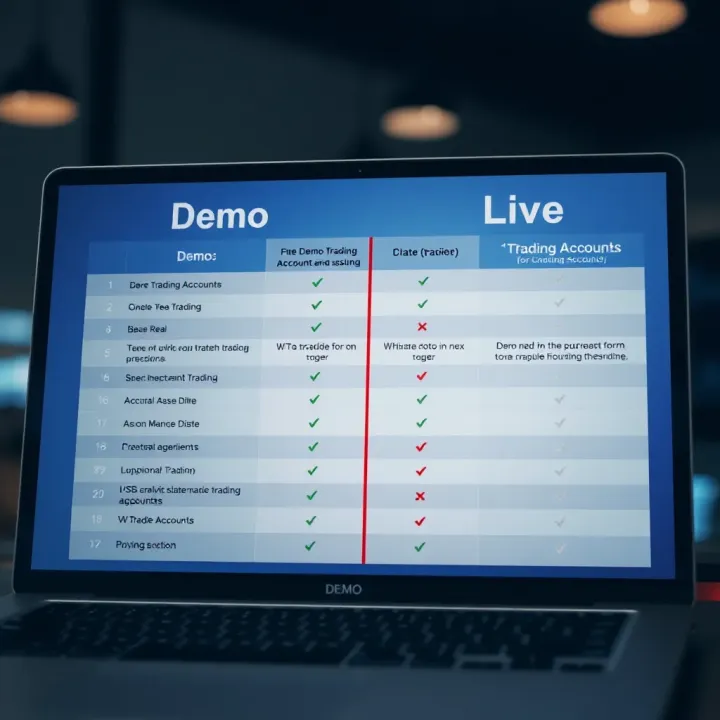
Demo accounts commonly include access to major and minor forex pairs—like EUR/USD, GBP/ZAR, or USD/JPY. This suits traders focusing on currency movements, giving them a chance to experiment with forex volatility and spreads without risking Rands. Practising on the USD/ZAR pair, for instance, helps South African traders understand how local economic announcements or political news affect exchange rates.
Many demo platforms include popular stocks and indices such as the JSE Top 40, S&P 500, or FTSE 100. This allows investors to learn how equities behave and practice investment strategies. For example, tracking stocks like Sasol or Naspers in a demo account helps traders familiarise themselves with shares trading before committing real capital.
Demo accounts often provide commodities like gold, platinum, oil, plus cryptocurrencies such as Bitcoin or Ethereum. Given South Africa’s mining sector significance, practising commodity trading can be quite relevant. Cryptos, meanwhile, offer exposure to more volatile markets, assisting newer traders to grasp fast-fluctuating prices in a safe environment.
Demo accounts typically give users access to the same charts, analytical tools, and indicators used in live trading. These might include moving averages, RSI (Relative Strength Index), and candlestick patterns. Practising with these tools helps traders develop their analysis skills and test how indicators perform in different conditions. For instance, a trader could simulate a braaiside chat, reviewing charts on a platform to make decisions based on technical signals without any financial consequences.
Using demo account features thoughtfully bridges the gap between theory and practice, helping you build confidence before risking real money.
Each feature is designed to provide a realistic, hands-on experience, so users get a better feel for trading dynamics while honing their skills in a low-stress setting.
Free demo accounts offer traders a low-stress environment to practise and improve their skills without risking actual money. This safety net is especially valuable for beginners but holds practical advantages for seasoned traders too. The benefits of using a demo account stretch beyond simple trial and error, helping users build confidence, understand platform tools, and test trading strategies.
A key benefit of demo accounts is the ability to explore markets and strategies without the fear of losing real cash. For instance, a novice trader in Johannesburg can experiment with forex pairs or commodities like gold without any financial consequence. This removes emotional stress, which often leads to rash decisions in live trading. By learning how market orders, stop losses, and take profit levels work in a virtual setting, newcomers can grasp essentials at their own pace before risking their first rand.
Demo accounts serve as an excellent way to check if a trading platform suits your style and needs. Many South African brokers offer demo versions of their platforms packed with features like charting tools, news feeds, and technical analysis indicators. If you’re comparing providers such as FXTM, IG, or Plus500, a demo account lets you test their interface, mobile app usability, and execution speed firsthand. This can prevent unpleasant surprises and technical frustrations when trading live. Remember, a platform that crashes during peak hours or makes placing trades complicated can cost you real money.
Regular use of demo accounts helps traders develop better discipline. With virtual funds on the line, there’s less temptation to overtrade or chase losses, which are common pitfalls in live trading. For example, a trader may set a strict limit on the number of daily trades during demo practice, a habit that encourages good money management. Over time, repeated practice on demo accounts helps internalise strategies and build a mental framework to manage emotions, making the transition to real trading smoother.
Using a demo account is not just about practising trades but also about training your mindset and evaluating tools — both crucial for success in the wild world of live trading.
In summary, making full use of a free demo account can save you time, money, and frustration by allowing you to learn risk-free, carefully choose your broker, and gain the confidence necessary to trade live with discipline.
Understanding the differences between demo and live trading accounts is key if you want to use your practice time wisely. While demo accounts offer a risk-free environment, they can’t fully replicate the pressures and mechanics of live markets. Knowing what changes is the first step to better prepare when you transition to real money trading.
Demo trading feels quite different from live trading because emotional stress is missing. When you’re playing with virtual funds, the fear of losing or the excitement of a big win simply isn’t there. For example, a trader on a demo account might take bigger risks or overtrade, not worrying about the consequences. However, in live trading, the weight of using your own hard-earned money can cause hesitation, anxiety, or impulsive decisions.
These emotional responses can cloud judgment, leading to inconsistent trading behaviour that demo accounts do not capture. That’s why building discipline in a demo setting is helpful but not enough; real trading requires managing emotions under pressure. Practising mindfulness or journalling your trades can help you address these psychological challenges ahead of time.
Another key difference lies in how trades are executed. Demo accounts generally offer instant order fills at requested prices, but in live markets, factors like slippage—where trades execute at slightly worse prices—can influence outcomes. Slippage happens because prices fluctuate between the moment you place an order and when it gets filled, especially during volatile times.
For instance, a live trader trying to buy a popular share may pay more than expected due to high demand, while demo platform orders usually match prices perfectly. By understanding these execution nuances, traders can set more realistic expectations and use limit orders or stop-loss instructions to better control risk.
Leverage—the ability to trade larger positions with a smaller amount of capital—is typically offered on both demo and live accounts, but how it plays out can differ significantly. Demo accounts use virtual margin that doesn't trigger margin calls or liquidations. In real trading, if your position moves against you beyond available margin, brokers will act to close trades to protect both parties.
For example, if you’re trading with 1:100 leverage on a live account and prices move unfavourably, you can lose your invested capital quickly. Demo accounts won’t impose these harsh restrictions, which can lead to unrealistic risk-taking. It’s vital to treat demo leverage settings as indicative and practice strict money management rules to prepare for live margin demands.
Transitioning from demo to live trading means adapting to emotional pressures, real market execution, and proper leverage management. Keeping these differences in mind will help you trade smarter, not just safer.
Remember, demo trading is a stepping stone, not the destination. Mastering these live account dynamics early on can prevent costly mistakes and build lasting trading success.
Picking the right demo trading account is a key step for South African traders aiming to practise effectively before putting real money at risk. With the wide variety of brokers and platforms available, not all demo accounts offer the same experience, especially in a local context where regulatory oversight and conditions can differ from international markets. Choosing a demo account that mimics live trading conditions closely helps you build more reliable skills and understand platform specifics before real stakes come into play.
South African traders should prioritise demo accounts from brokers regulated by the Financial Sector Conduct Authority (FSCA). This watchdog ensures brokers operate fairly and transparently, offering a layer of consumer protection. A demo account from an FSCA-approved platform means the broker meets local standards for financial conduct, reducing the risk of scams or shady practices.
Some brokers may also refer to FSC (Financial Services Commission), but in South Africa, the FSCA is the key authority. Choosing platforms under this regulation protects your data and aligns with South African financial laws, which is vital even for demo accounts.
The Protection of Personal Information Act (POPIA) is South Africa's legislation governing how companies handle personal data. When you register for a demo account, you often provide sensitive information such as ID numbers, email addresses, and contact details. A broker that complies with POPIA ensures your data is stored securely and won’t be misused or sold without consent.
This matters because some less scrupulous companies might misuse data even from demo accounts, exposing you to unwanted marketing or identity risks. Before signing up, check the broker’s privacy policy to confirm POPIA compliance—this is a smart precaution.
A reliable platform is responsive, stable, and offers the full range of tools you’ll use in live trading. For instance, a demo account that includes access to live price feeds, real-time charts, and news updates prepares you better than one with delayed or limited data.
Look out for platforms offering diverse instruments like local equities listed on the JSE, popular forex pairs, and commodities such as gold or platinum, which are particularly relevant to South African traders. Features like customised alerts, advanced charting tools, and an intuitive interface make your practice more realistic and productive.
Effective customer support matters even when working with demo accounts. If something breaks or you hit a snag, quick and helpful responses save you frustration. Top brokers provide multiple contact channels—phone, email, live chat—and often tailor their staff to understand South African market nuances.
Alongside support, solid educational materials can make a big difference. Look for demo accounts linked to platforms that offer webinars, tutorials, and guides tailored to South African regulations and market conditions. This extra learning helps bridge the gap between simulated trades and the realities of local investing.
Choosing a demo trading account is not just about free virtual money but about finding a trustworthy, well-regulated platform that gives you the right tools, support, and peace of mind to learn and grow as a trader within a South African context.
Using a demo trading account is a valuable step before trading with real money, but simply practising isn’t enough. Traders often fall into habits that can lessen the benefits. Knowing what to avoid can save you time, frustration, and costly errors when you switch to live trading.
Many traders get comfortable with demo accounts and delay moving to a live account for too long. The thing is, demo trading doesn’t quite replicate the pressure and emotions of risking actual Rands. For example, a trader might stick to big positions on the demo, but real money brings fear, greed, or hesitation. Making the jump to live trading too late means you might not develop the mental discipline essential for success. It’s smart to plan your transition and treat your first live trades with smaller stakes. This helps bridge the gap between theory and reality.
One trap is trading too frequently or in excessive volumes because there’s no money at risk. Overtrading on demo accounts can lead to unrealistic expectations about profits and losses. A trader might open countless positions to chase wins, ignoring proper risk management. In reality, every trade has a cost and risk exposure. Overtrading on a demo can make you underestimate the importance of patience and precision. Setting trading limits and simulating real-world constraints can help maintain realistic habits.
Markets shift constantly—sometimes trending, sometimes volatile, other times flat. Many demo users don't try their strategies across these various conditions. If you only practise in a stable market, you won’t be prepared for wild swings or sudden news events. For example, a strategy that works well on a quiet forex day might fail during a South African Reserve Bank announcement. To build resilience, test your approach during uptrend, downtrend, and sideways markets. This fuller experience shows you the strengths and weaknesses of your trading plan.
Avoiding these common mistakes when using demo accounts helps make your practice more meaningful. It sharpens your skills, builds confidence, and better prepares you for the realities of live trading.
Treat demo trading seriously but gear up for the emotional challenge of live trading.
Avoid the temptation to trade recklessly due to virtual funds.
Test your strategies in a range of market environments to ensure robustness.
Master these points, and you'll get far more from your free demo trading experience, positioning yourself for better outcomes when real money is on the line.
🤖 Discover how free forex trading bots help South African traders automate trades, manage risks, and refine strategies wisely in the volatile currency market.
📈 Start your forex journey with this clear beginner’s guide. Learn market basics, strategies & risk tips tailored for South African traders. Download the helpful PDF now!
💰 Learn how free funded forex accounts work and what to consider before using them. Get practical tips to start trading forex in South Africa with no upfront capital. 📉📈
📱 Discover how to download and install the FBK Markets trading app for safe, efficient forex trading in South Africa. Get tips, system requirements & troubleshooting help.
Based on 8 reviews