
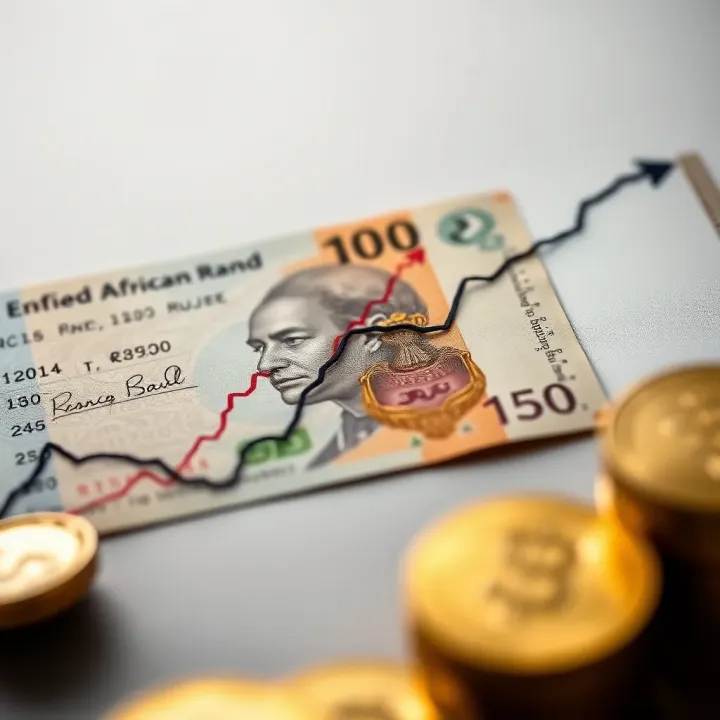
Rand to INR Exchange Rate Forecast and Trends
📈 Explore the ZAR to INR forecast with insights on trends, economic factors, and expert views to guide South African investors and businesses confidently.
Edited By
Isabella Hughes
Understanding the EUR/GBP exchange rate is vital for traders, investors, and financial advisors focused on Europe or the UK. This currency pair reflects the relative strength and economic health between the eurozone and the United Kingdom. Movements in EUR/GBP can impact import/export costs, investments, and even broader market sentiment.
Several factors play a role in shaping the pair’s direction. Economic data such as GDP growth rates, inflation statistics, and unemployment figures from both regions supply key signals about currency demand. For example, a stronger eurozone GDP coupled with weaker UK economic numbers usually pushes EUR/GBP higher.

Political developments also influence the rate significantly. Brexit-related negotiations, trade agreements, and shifts in government policy often inject volatility. In 2019, uncertainty around the UK’s withdrawal deal led to sharp swings in EUR/GBP, highlighting how sensitive the market can be to political signals.
Additionally, central bank policies from the European Central Bank (ECB) and the Bank of England (BoE) matter greatly. Interest rate changes, quantitative easing, or forward guidance on monetary policy tend to move the market quickly. When the ECB signals a slow approach to tightening compared to the BoE, the pound often strengthens against the euro.
Monitoring a combination of economic releases, political news, and central bank announcements is key to anticipating EUR/GBP trends effectively.
To summarise, traders should watch:
Economic indicators: inflation, GDP, employment data
Political events: elections, trade talks, policy shifts
Central bank signals: interest rates and monetary policy updates
Staying updated with these elements helps form a more accurate outlook on where the EUR/GBP might head next. This informed approach aids in timing trades or financial decisions that involve euro or pound exposure, helping to manage risk and spot opportunities in this heavily traded currency pairing.
Understanding the EUR/GBP currency pair starts with recognising its role as a measure of the exchange rate between the euro, used by 19 European Union countries, and the British pound sterling. Traders frequently watch this pair due to its position among the top currency pairs in the forex market, often reflecting economic relations and political developments between the Eurozone and the UK. This pair does not only highlight exchange rate fluctuations but also serves as a barometer for shifts in trade, investment, and monetary policies.
The EUR/GBP pair represents how many British pounds one unit of the euro can buy. It’s a key tool for forex traders because it captures the dynamics of two major economies that are closely linked yet politically and economically distinct. For example, the pair responds swiftly to Bank of England interest rate announcements and European Central Bank policy changes, creating windows of opportunity for speculative trading.
For South African investors, the EUR/GBP matters beyond just the forex market. Many local companies import European goods or have business ties with the UK. A sudden shift in the EUR/GBP rate can impact the cost of imported equipment or the revenue earned from exports. Plus, South African travellers and students going to Europe and the UK should keep an eye on this pair, as it directly affects their budgeting for accommodation, tuition, and daily expenses.
Recent years have seen the EUR/GBP trading in a relatively narrow range, largely due to the ongoing political uncertainties such as Brexit negotiations and the Eurozone's uneven economic recovery. Between 2020 and 2023, the pair was influenced by pandemic recovery policies and shifting trade deals, causing short-term spikes followed by pullbacks. Traders noticed phases where the pound weakened amid UK political turmoil, only to reclaim ground when economic data improved.
Looking further back, the currency pair has experienced both quiet stability and intense volatility. For instance, 2016 saw a significant plunge in GBP following the Brexit referendum, pushing EUR/GBP sharply higher. On the other hand, periods like 2014–2015 were marked by relatively steady movement as markets digested ECB’s quantitative easing while the UK maintained a cautious monetary stance. These fluctuations underscore the importance of factoring both long-term trends and short-term shocks when forecasting or managing risk in the EUR/GBP.
The EUR/GBP pair offers a snapshot of complex cross-border economic and political influences — a valuable compass for traders and investors alike.
Understanding these foundational features sets the stage for deeper analysis, highlighting why watching EUR/GBP closely is a must for those engaged in financial markets, particularly those with South African exposure or interest.
Understanding the economic factors that influence the EUR/GBP exchange rate is essential for traders and investors looking to navigate this currency pair effectively. These factors offer insight into how shifts in policies and economic performance in both the Eurozone and the United Kingdom can cause fluctuations. For South African investors, this knowledge helps in managing currency risk and timing investments.
Interest rate changes by the European Central Bank (ECB) and the Bank of England (BoE) can have a swift and notable effect on the EUR/GBP pair. When either central bank raises rates, it typically signals confidence in economic growth and an attempt to keep inflation in check. For instance, if the BoE raises interest rates while the ECB keeps theirs steady, the pound often strengthens against the euro due to higher returns on investments denominated in GBP. Conversely, a cut in rates usually weakens the currency.

Traders should keep a close eye on policy announcements and the economic outlook provided by these banks. The timing and magnitude of rate changes often drive short-term volatility, creating opportunities or risks that need active management.
Both the ECB and BoE have employed quantitative easing (QE)—injecting liquidity by buying government bonds—to stimulate their economies after crises like the 2008 financial crash and the COVID-19 pandemic. When the ECB expands its QE programme and the BoE remains cautious or begins tightening monetary policy, the euro may weaken against the pound.
Monetary tightening, which includes reducing the central bank’s balance sheet and slowing bond purchases, tends to strengthen a currency. Investors should watch central bank minutes and statements closely, as unexpected changes can lead to swift market reactions.
GDP figures provide a straightforward snapshot of economic health. Strong GDP growth in the UK relative to the Eurozone often boosts the pound against the euro, reflecting robust business activity and consumer spending. For example, if the UK reports a 0.5% quarterly increase while the Eurozone stagnates, this gap typically pressures EUR/GBP downward.
For investors, tracking quarterly and annual GDP releases helps anticipate directional moves and adjust portfolio exposure accordingly.
Inflation measures the rise in prices over time and plays a central role in central bank decisions. High inflation often prompts tighter monetary policy, which can strengthen the currency. For example, if inflation in the UK climbs above the BoE’s 2% target while Eurozone inflation stays stable, this may lead to interest rate hikes favouring GBP strength.
Monitoring changes in consumer price index (CPI) reports offers traders guidance on upcoming policy actions and market sentiment shifts.
Strong employment figures in either economy point to healthy demand and possibly rising wages, which fuel inflationary pressure. For instance, an unexpected drop in UK unemployment could encourage the BoE to consider tightening policy sooner, benefiting the pound.
Labour market reports, including unemployment rates and job creation statistics, act as early signals for shifts in central bank stance and currency strength.
Economic policies and indicators don’t move in isolation; traders must consider their interplay and timing to make informed EUR/GBP decisions that reflect real-world conditions across both regions.
The EUR/GBP exchange rate does not move in a vacuum. Political events and geopolitical shifts hold significant sway over market sentiment and currency flows. For traders and investors, understanding these variables offers a clearer picture of upcoming fluctuations and risk factors. Given the intertwined histories and economies of the UK and the Eurozone, political developments often drive sharp, sometimes rapid, movements in this currency pair.
Trade negotiations with the EU remain a live issue despite the formal Brexit split. The UK still negotiates trade agreements with the European Union, influencing cross-border business and investor confidence. For instance, any uncertainty about customs checks, tariffs, or regulatory divergence can trigger short-term volatility in EUR/GBP. South African investors paying attention to supply chains that cross the UK-EU border should factor this risk into their currency exposure planning.
Domestic political stability and policy direction in the UK also shape GBP strength. Periods marked by leadership changes, parliamentary infighting, or election results can unsettle markets. A clear example was the political unrest during Theresa May's premiership, which weakened the pound due to uncertainty over Brexit strategy. Stability or clarity—such as a strong government committed to growth policies—tends to buoy the pound. Traders should keep a close eye on UK political news and polls, as changes here often prelude currency shifts.
Influence of elections and coalition governments within the Eurozone cannot be underestimated. The euro’s value can fluctuate around election cycles, especially if key member states like Germany, France, or Italy face political upheavals. Because many Eurozone countries operate coalition governments, the formation and stability of these alliances impact fiscal policies and investor trust. For example, when Italy’s coalition government faced uncertainty in recent years, the euro took a hit, affecting EUR/GBP rates.
Fiscal policy across member states is crucial since the Eurozone combines diverse economies under one currency. Differences in budget discipline, debt levels, or stimulus plans influence euro sentiment. Countries with higher fiscal deficits or sceptical markets might see the euro soften, especially against the pound if the UK pursues tighter economic policies. Understanding this dynamic helps investors evaluate whether EUR/GBP moves stem from broader regional concerns or UK-specific issues.
Political shifts often cause sudden EUR/GBP moves that technical indicators might not predict. Staying informed on these developments equips investors with the edge to respond swiftly and confidently.
Key takeaway for South African investors: Political risks in the UK and Europe are integral to EUR/GBP movements and should be factored into hedging strategies and trading decisions. Keep an eye on upcoming elections, government announcements, and trade talks to stay ahead of potential volatility.
Technical analysis plays a significant role in forecasting the EUR/GBP currency pair, especially for traders and investors who rely on market data to time their entries and exits. Unlike fundamental analysis that focuses on economic indicators and political events, technical analysis looks at price patterns, trends, and market behaviours gleaned from the historical price and volume charts. This approach offers practical insights into potential future movements, making it invaluable for those seeking to capitalise on short- to medium-term shifts in the exchange rate.
Recent price action and trend lines serve as the foundation for spotting support and resistance — the price levels where buying or selling pressure tends to pause or reverse. Support is often seen as a floor where the price doesn’t drop below easily, while resistance forms a ceiling the price struggles to break above. For the EUR/GBP, recent price swings can illuminate these zones clearly. For instance, if the pair hits around 0.8600 multiple times without falling below, that level becomes a key support. Conversely, if it repeatedly struggles near 0.8800, that marks a resistance level. Identifying these allows traders to plan stops and targets more effectively.
Key chart patterns to consider include shapes like double tops, head and shoulders, triangles, and flags. These patterns signal potential trend reversals or continuation. Say the EUR/GBP forms a ‘double bottom’ — two distinct low points at a similar price — this might suggest a strong support level and a possible upward move. Triangles, where price ranges become tighter, often precede sharp breakouts; recognising such formations early can prompt timely trades. By understanding these patterns, traders gain hints on when momentum might shift.
The Relative Strength Index (RSI) measures how quickly and strongly the price is moving, flagging overbought or oversold conditions. Typically, an RSI above 70 suggests the EUR/GBP is overbought — ripe for a correction — while below 30 indicates oversold, possibly signalling a bounce-back. For example, during periods of Brexit uncertainty, sharp swings caused the RSI to hit oversold levels multiple times, hinting at potential reversals that some traders could exploit.
Meanwhile, the Moving Average Convergence Divergence (MACD) tracks the relationship between two moving averages, helping to spot shifts in momentum. A MACD line crossing above the signal line might suggest bullish momentum, while crossing below signals bearish pressure. For EUR/GBP, this can confirm trend changes indicated by price action. Coupling MACD signals with support and resistance levels provides a more grounded approach to trading decisions.
Use technical analysis not as a crystal ball, but as a toolkit for reading the market’s mood — it helps anticipate likely moves in EUR/GBP, though always keep an eye on fundamentals too.
In sum, mastering support and resistance levels alongside momentum indicators equips traders with practical tools to navigate the EUR/GBP market. These methods bring clarity in times of volatility, like around political events or economic updates, giving South African investors a practical edge in decision-making.
For South African investors dealing with the EUR/GBP currency pair, practical factors can significantly influence trading results. Understanding how exchange rate movements impact local businesses and investments is critical. These investors often face unique challenges due to the rand’s volatility and broader economic conditions, such as loadshedding. Paying attention to these elements helps manage risk and seize opportunities effectively.
Fluctuations in the EUR/GBP rate can directly affect the cost of imports and exports. For example, a weaker pound against the euro means British goods become pricier for South African importers purchasing via the UK. This impacts retailers sourcing products from the UK or Eurozone, potentially leading to higher prices for consumers. Conversely, South African exporters selling into Europe might find that shifts in EUR/GBP influence competitiveness and profit margins depending on which currency gains ground.
Exchange rate swings don’t just affect pricing; they can alter cash flow and budgeting for businesses trading internationally. Knowing this helps companies avoid unpleasant surprises.
On hedging strategies, investors can use forward contracts or currency options to lock in rates and shield against unfavourable moves. These tools come handy in stabilising costs or revenues when dealing with volatile pairs like EUR/GBP. For instance, an importer expecting to pay €100,000 in three months might secure the current rate today through a forward contract, protecting against any spike in the euro or fall in the pound.
Effective hedging isn’t for everyone, though. It requires careful assessment of exposure size, timing, and cost. Investors should weigh if the premium on options or the obligation from futures suits their risk profile. Financial advisors often recommend using hedges selectively, based on realistic forecasts and business needs, rather than as a blanket solution.
The strength or weakness of the South African rand plays a crucial role in trading EUR/GBP. If the rand weakens against these currencies, imported goods and services become more expensive locally, affecting purchasing power and demand. Likewise, a stronger rand can make foreign assets cheaper, tempting investors to shift funds abroad or import goods more aggressively.
Moreover, rand fluctuations can complicate profit calculations for South African investors engaged in forex trading or holding foreign assets. Forex traders might find opportunities in arbitrage, but for businesses, the changing value demands close attention to balance sheets and cash management.
Eskom loadshedding and overall economic stability also influence investor decisions. Frequent power interruptions disrupt production schedules and affect confidence, possibly triggering conservative trading behaviour or capital flight. For example, manufacturers reliant on continuous operations might see reduced exports, which indirectly involves EUR/GBP exposure when transactions are carried out in euros or pounds.
Economic uncertainty triggered by local issues like loadshedding often makes investors cautious. They may seek safer havens or require higher risk premiums to maintain exposure to volatile currency pairs. This local factor mixes with global forces to create a complex environment that requires careful analysis before making trades.
South African investors benefit most by staying alert to these practical considerations and integrating global currency forecasts with local market realities to make well-informed decisions.
📈 Explore the ZAR to INR forecast with insights on trends, economic factors, and expert views to guide South African investors and businesses confidently.

📉 Get insights into the GBP/ZAR exchange rate. Discover key trends, economic factors, and what the months ahead hold for the British Pound vs Rand.

Explore how economic trends, politics, and market mood influence the South African rand to US dollar exchange rate 💹 and what future changes may bring.

📉 Explore the latest NZD to ZAR trends, key economic factors, and market insights shaping this currency pair for informed trading and investment decisions.
Based on 8 reviews